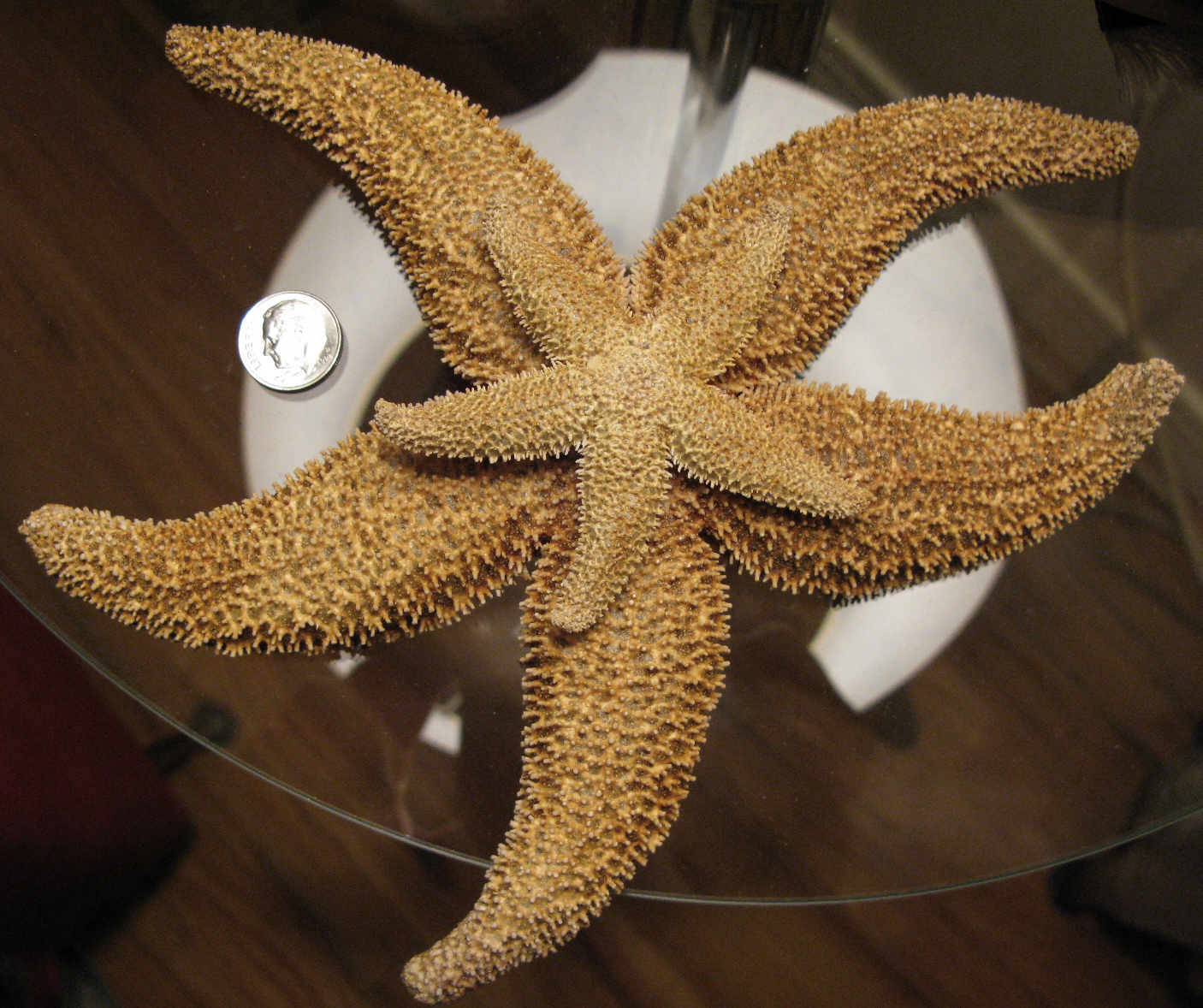
 At the western-most parking lot at Fort Tilden, we came across a pile of treasures of suspicious provenance. There were perfectly intact shells of both our big whelk species, moon snails (including the largest I’ve ever seen), and lots of sea stars. I’ve never found a sea star on the beach around here, and usually the whelks and snails are bashed up pretty good. This pile, already well weathered — and, in the case of the sea stars, dried out to stiffness — looked like it might have been dredged or otherwise trapped en masse. What was going on?
The common sea star, Asterias forbesi, is no stranger to our waters, but, as noted, you usually don’t see them on the beach. Most of the ones in this pile were small, but there were a couple of big-handed ones. (The size difference is illustrated above.) These echinoderms (from the Greek for “spiny skin”) wrestle bivalves apart with their arms and force their stomachs in between the shells to eat the goodness inside. (Further comment, it seems to me, would be superfluous.)
 Backyard and Beyond
Leave a comment