 The best way to see an owl is to follow the birders.
Owl sightings, especially in the city, are rare, exotic, and spectacular. As such they attract crowds. This can be a problem, since during the day, which is of course when we see best, owls sleep. Crowds can keep the animal awake and stress it out, perhaps even clue in its enemies (crows, jays, etc., mob owls) as to its location.
Yet the appeal of owls is very powerful. The twilight fly-out of these birds from their roost is a near magical experience. That experience in the city is even more so. So we have a classic confrontation between human curiosity/desire and the imperatives of stewardship. One of the ways that is resolved is with birding ethics, which urge that the location of an owl is not publicized. And this should be a given for any nature observation: walk softly and respectfully, do no harm.
 The checklist of NYC birds I use lists Barn, Eastern Screech, Great Horned, Snowy, Barred, Long-eared, Short-eared, and Northern Saw-whet. All are rare or extremely rare in all seasons. Personally, within the bounds of the five boroughs, I’ve seen Barn, Eastern Screech, Great-horned, Northern saw-whet, and Boreal, a most unexpected visitor to the pines around the old Tavern on the Green some years ago, not including captive raptor demonstrations (where my better pictures come from).
Barn owls breed in Jamaica Bay in nest boxes put up for the purpose (the one pictured above is a captive bird from a rehab facility). Great horned owls have attempted to breed in Brooklyn the last couple of years. A few Snowy owls from the far north are sometimes found along the barrier beaches of Queens and the rest of Long Island in winter. The smaller owls, meanwhile, come and go, many most likely unseen by even the best of the bird dogs, as I call the hard core birders.
Signs and portents:
Most birding is done by day, when most birds are active. A good thing, if you like birding. After all, it’s nigh impossible to see in the dark. Unless you’re owl. So it’s more likely that you’ll see see signs of owl before you ever see an owl.
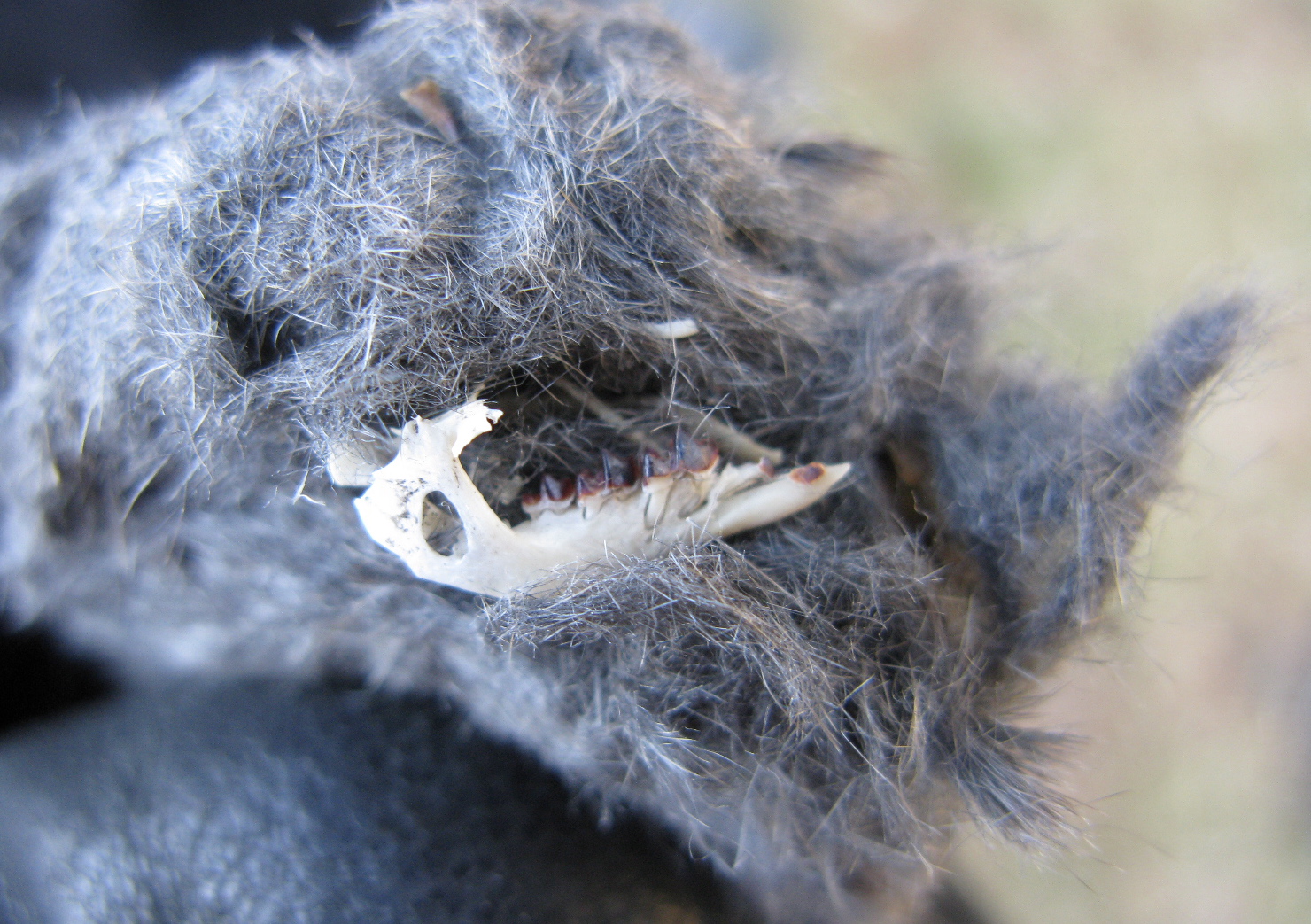 Owls gulp their prey whole and then later throw up pellets of undigested fur, feathers, and bones. Many people may remember these pellets from biology classes, where they are dissected to analyze the contents. The wetter, fresher, ones look rather turd-like; the older, dryer ones are softer and furrier. The one pictured, formerly a mole or shrew or mouse, was found in the New York Botanical Garden. (Here are some I found last Thanksgiving outside the city.)
Because they usually roost in the same places, owl droppings are another sign. These very liquidy droppings, called whitewash since they generally look like that, or, intriguingly, mutes*, can collect on tree trunks or underneath trees. Not to be confused with the generally whitish sap of conifers.
Owls are generally silent during the day. At night, marking their territory or engaged in mating rituals, they can be very vocal. Each owl species has its distinctive calls and sounds. Get to know them. I “saw” my first Barred owl initially with my ears. The Cornell Lab is renowned for its bird recordings.
*Mute: noun and verb, from the Middle English muten from, ultimately, the Old French esmeltier, melt, defecate. Can be used for all birds, but I’ve only heard it in context of owls.
Owl Week continues…
 Backyard and Beyond
Leave a comment