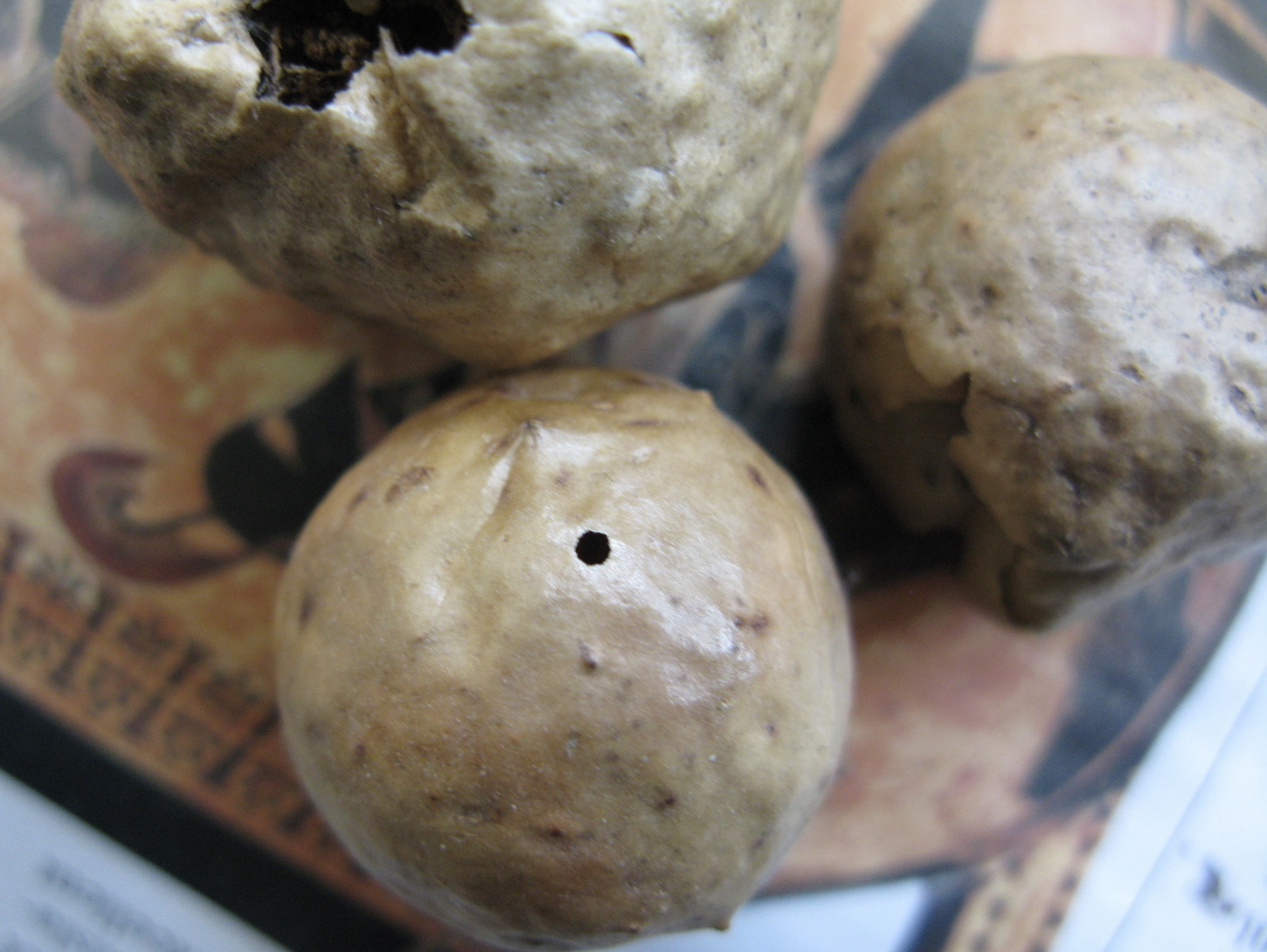
 Today is Oak Apple Day, celebrating the restoration of Charles II, who famously hid in an oak during the English Civil War. Pity he got away. Anyway, this post is about oaks, oak galls, and/or oak gall wasps, whichever come first, not my vigorous and patriotic anti-royalism.
When last we discussed galls, I kept the dried samples seen above back for a future post. Conveniently, while at Doodletown earlier this month, we found a couple of fresh versions of these galls, which, when opened revealed a fantastic structure.
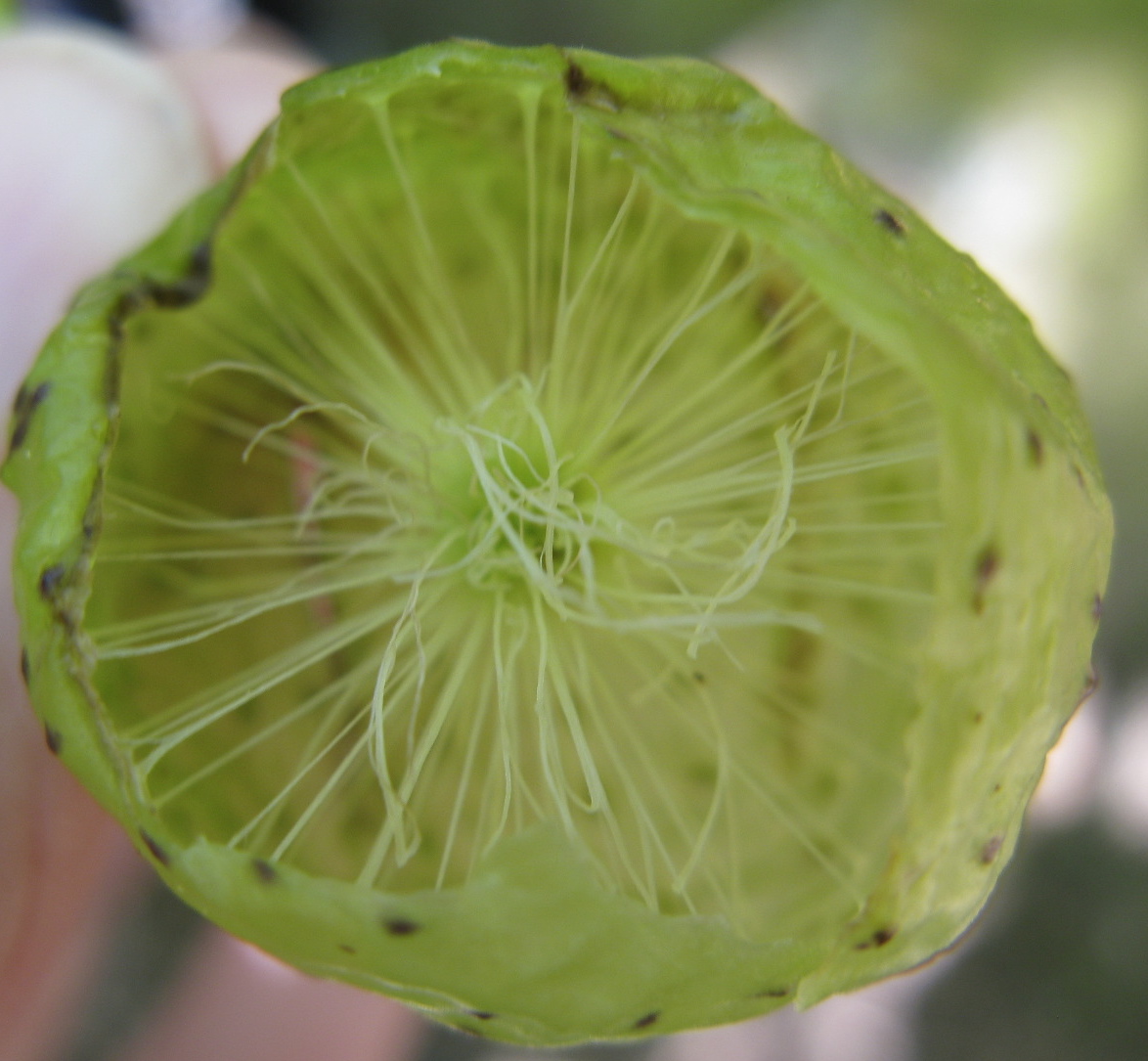 Remember, galls are created by the interaction between an animal and a plant: in this case, tiny cynipid wasp larva, genus Amphibolips, and an oak tree. The wasps cause or force a chemical reaction in the plant, which forms these balls, which in turn protect and nurture the wap larva as it pupates. The galls start out freshly green and dry to a leafy brown. The adult wasp crawls out of the gall and flies off to make a new generation. Sometimes, of course, parasites come out instead.
Rich in tannic acid, galls have long been used to make ink. Gall ink was used in Europe for centuries, with the Aleppo gall, from Turkey, most favored. The U.S. Constitution was written in gall ink; most handwritten historic documents were. You can find recipes for making your own on the web here and elsewhere. I like the one with nails and vinegar. The ink darkens as it dries. Are there any artists doing this in the city? I’d love to see and document the process.
In an article about the current Caravaggio exhibit in Rome, I read that the gall-based inks used in the numerous archival documents about that very troublesome painter are, because of their high acid content, cutting into the paper. They are doomed unless conserved.
Also, in hunting around the web, I was reminded that Alfred Kinsey, the famous sex researcher, started out as a cynipid wasp man before he became, in the Cold War stylings of Dr. Strangelove‘s Col. Bat Guano, a “pre-vert.” There are hundreds of these tiny wasps in our region (they are harmless to humans), and many of them make oak species a part of their life cycle.
Think of the oak, then, with its roots encouraging fungi, and all the animals living on it above and below. What a marvel! Where does the oak begin, where does it end, or is just foolish to think this way? Where do we begin and end, with all our internal and external microbes, without which we could cease to be?
 Backyard and Beyond
Leave a reply to Galls and Crane Fly « Backyard and Beyond Cancel reply