Brooklyn, which is located at the mouth of what Walt Whitman called “fish-shaped Paumanok,” using a Native American word for what we now call Long Island, is, geologically speaking, loosey-goosey. We are sitting on glacial till, the rubble (sands, clays, gravels, erratics, etc.) pushed down here during the Pleistocene by the ice. (There was plenty of beach-front property in those days, only it was much further to the south.) There are actually two terminal moraines on Long Island, from different glacial advances. The moraine curving through Brooklyn is called Harbor Hill, but that’s not a very well-known name; better known are such neighborhoods as Bay Ridge, Park Slope, Greenwood Heights, Prospect Heights, and so on, which memorialize the topography. (And on the other side of the moraine is the outwash plain, rather appropriately called Flatlands and Flatbush around here. )
As a result of the glaciers, we have a lot of differently-aged pieces of earth here, all a-jumble. (The Rock Garden at the Brooklyn Botanic Garden has a number of boulders labeled as to type and place of origin.) What this means for our purposes is that it is very hard to date anything found in the ground. Take this, for instance:

 If this isn’t an ancient stiff-tail, Trilobitomorpha telsonia, then my name is Harcourt Fenton Mudd. These suckers haven’t been sighted since the Permian! I’m no expert, of course, far from it, but I think this is rather extraordinary, even with the muddled provenance. I found it at the building site for The Teilhard, the look-at-me-glass-wrapped needle of a “luxury” apartment tower on Nelson St., hard by the Brooklyn-Queens Expressway.
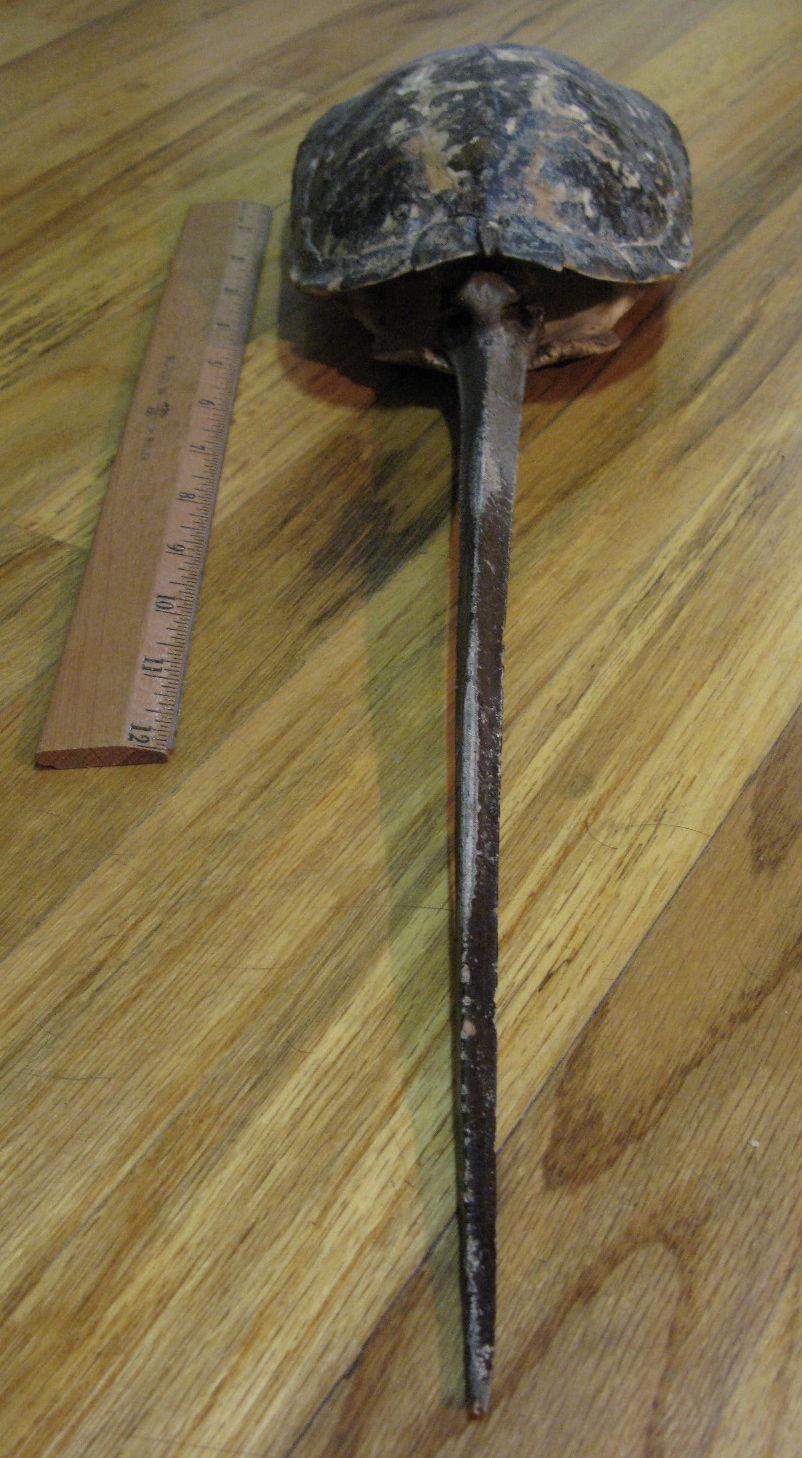
I am awaiting a delegation from the AMNH.
 Backyard and Beyond
Leave a reply to Melissa Cancel reply