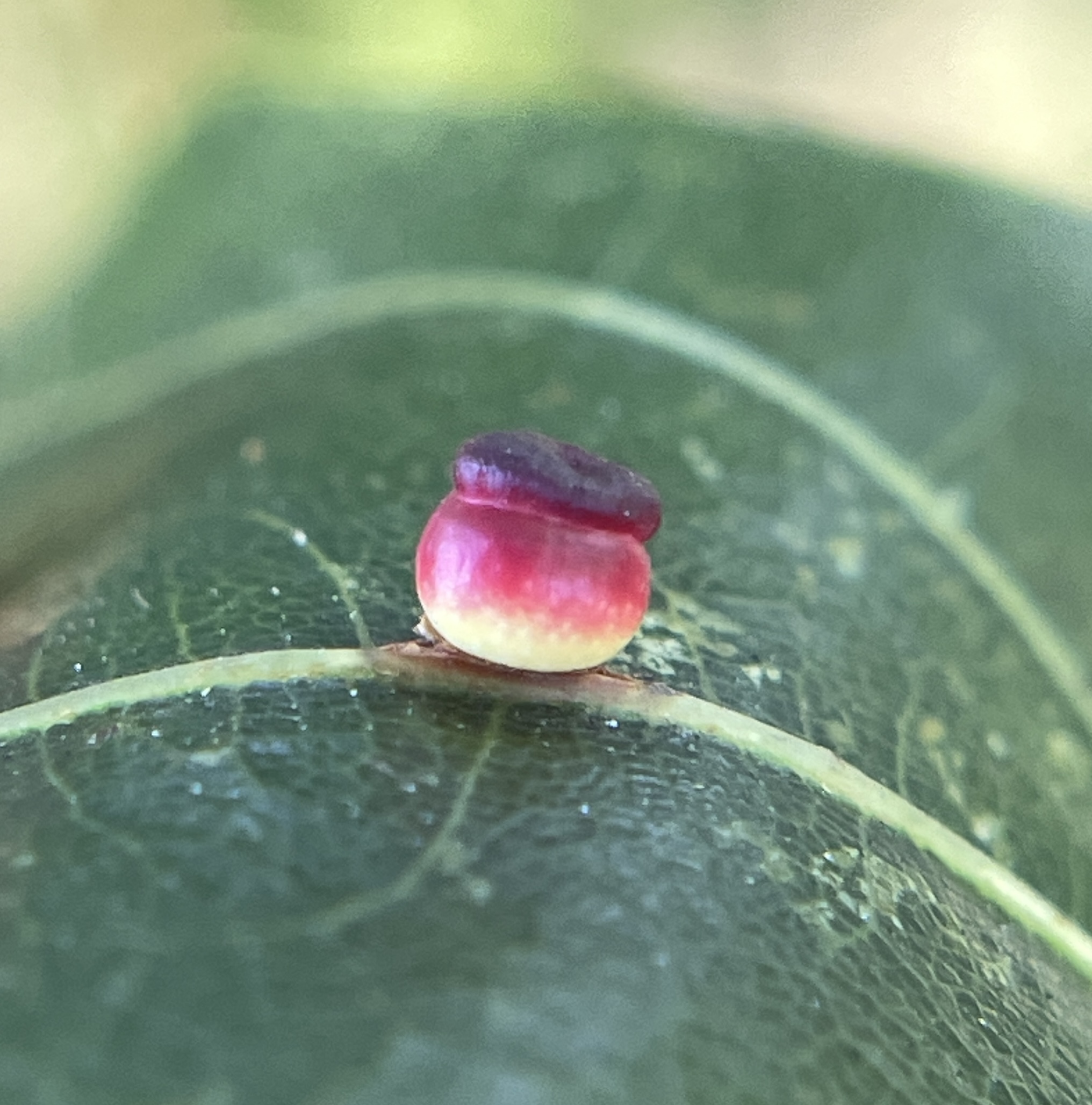
A gall is a plant growth induced by an alien species. In the case of oak galls, the majority are forced by tiny Cynipid wasps. This is one of my favorites: Kokkocynips rileyi, on Scarlet Oak/Q. coccinea. (This particular gall has a kapello or cap that attracts ants once the galls falls to the ground; this helps disperse the wasps.)

This is Lobed Oak Gall Wasp/Andricus quercustrobilanus, on a branch of Swamp White Oak/Q. bicolor. Inside these units, wasp larvae grow up, feeding on the plant tissue they have forced to develop around them. These are such delightful spaces that other species want in: some just for the shelter & food, others, typically parasitic wasps, to prey on the wasp larvae.
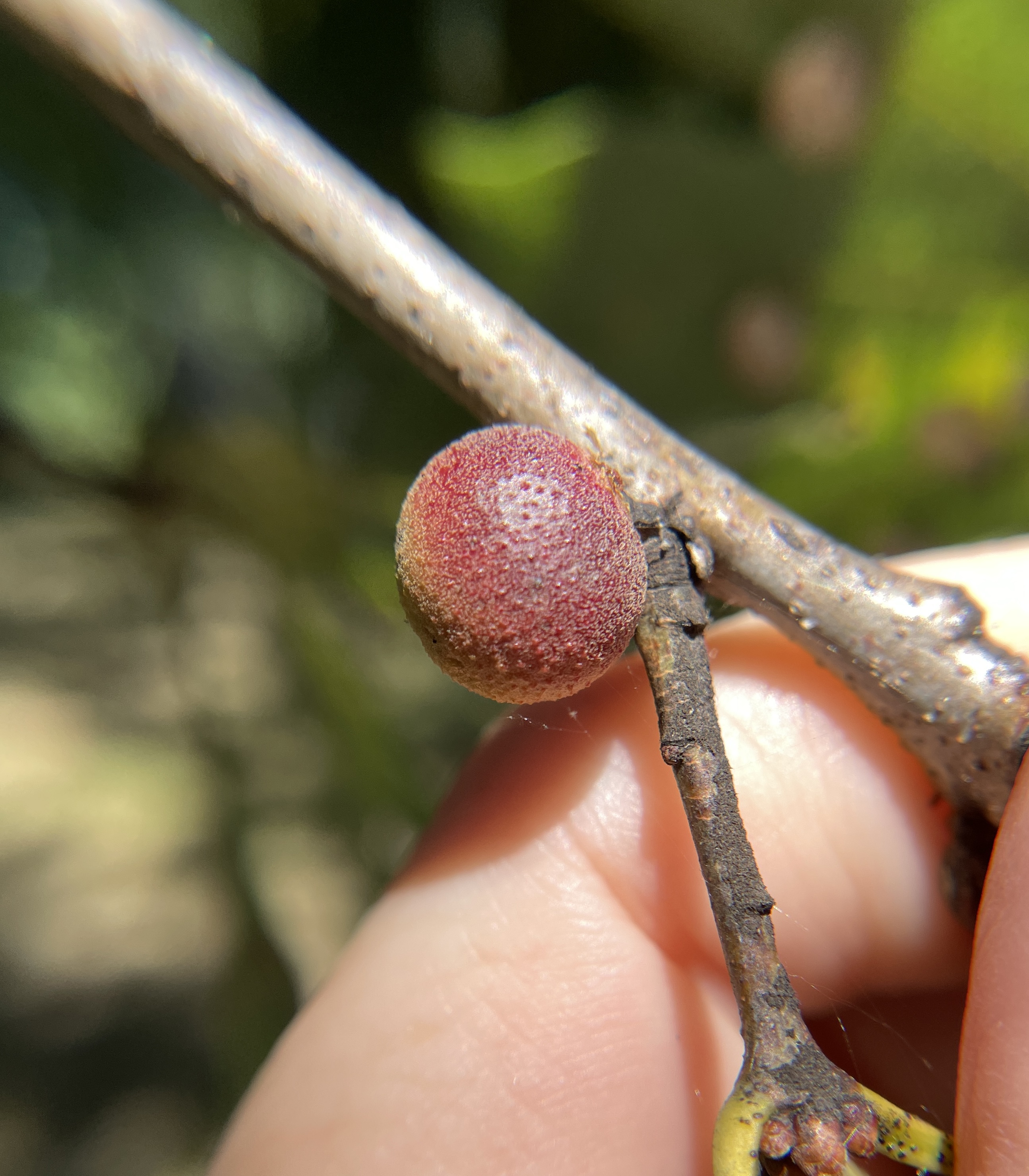
Round Bullet Gall Wasp/Disholcaspis quercusglobulus on White Oak/Q. alba. (The common name dates back a bit: when were bullets still round?) Here’s where things get a little tricky: these extravagant galls are agamic: only female wasps will emerge from them. They, in turn, produce a sexual generation, male and female, that gall on other parts of the tree, usually the buds. But here’s the rub: the sexgen galls are much more obscure than the agamic ones; some haven’t even been found.
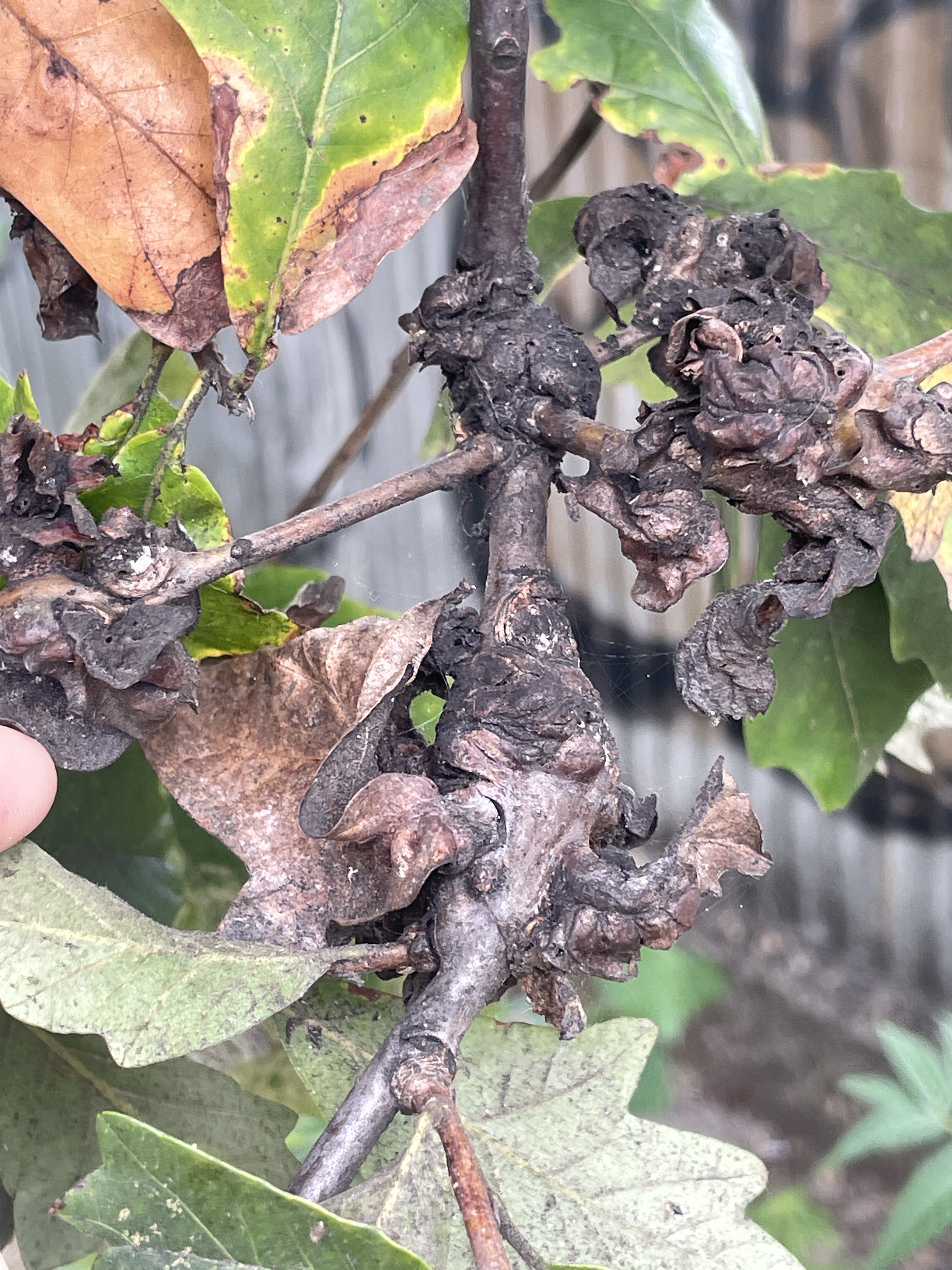
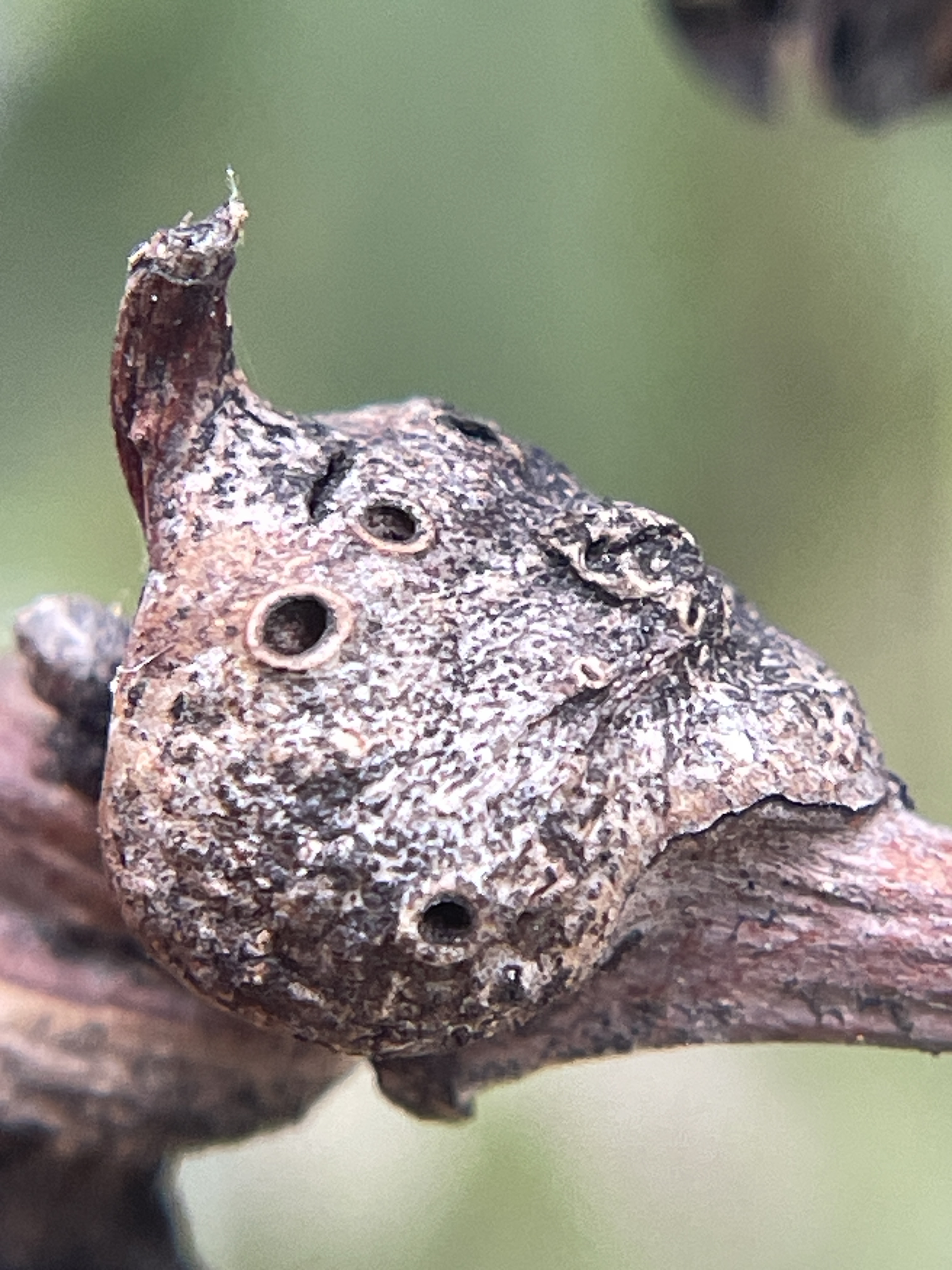
Here’s an example of a gall that’s hard to miss: Oak Potato Gall/Neuroerus quercusbalatus, on Swamp White Oak. In this case they’re named after the agamic potato-like swellings of the tree branches. But the gnarly twisty bits may be more obvious: these are the sexgen galls, on the petioles and leaf midribs. This is one case where the sexgen galls are in your face.
 Backyard and Beyond
Leave a comment