Backyard and Beyond

Starting out from Brooklyn, an amateur naturalist explores our world.

As John Burroughs said, “The place to observe nature is where you are.”

Dazed

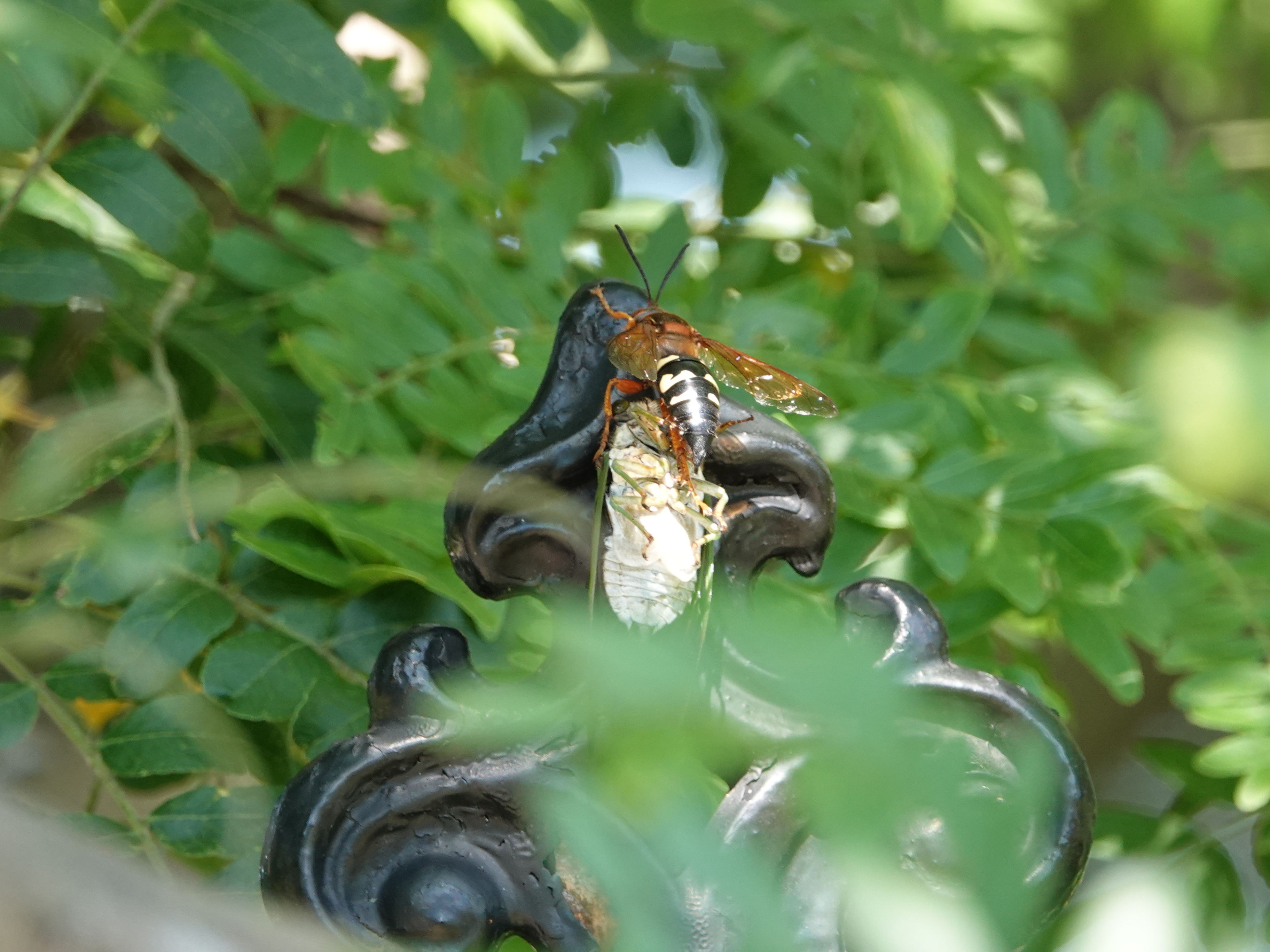
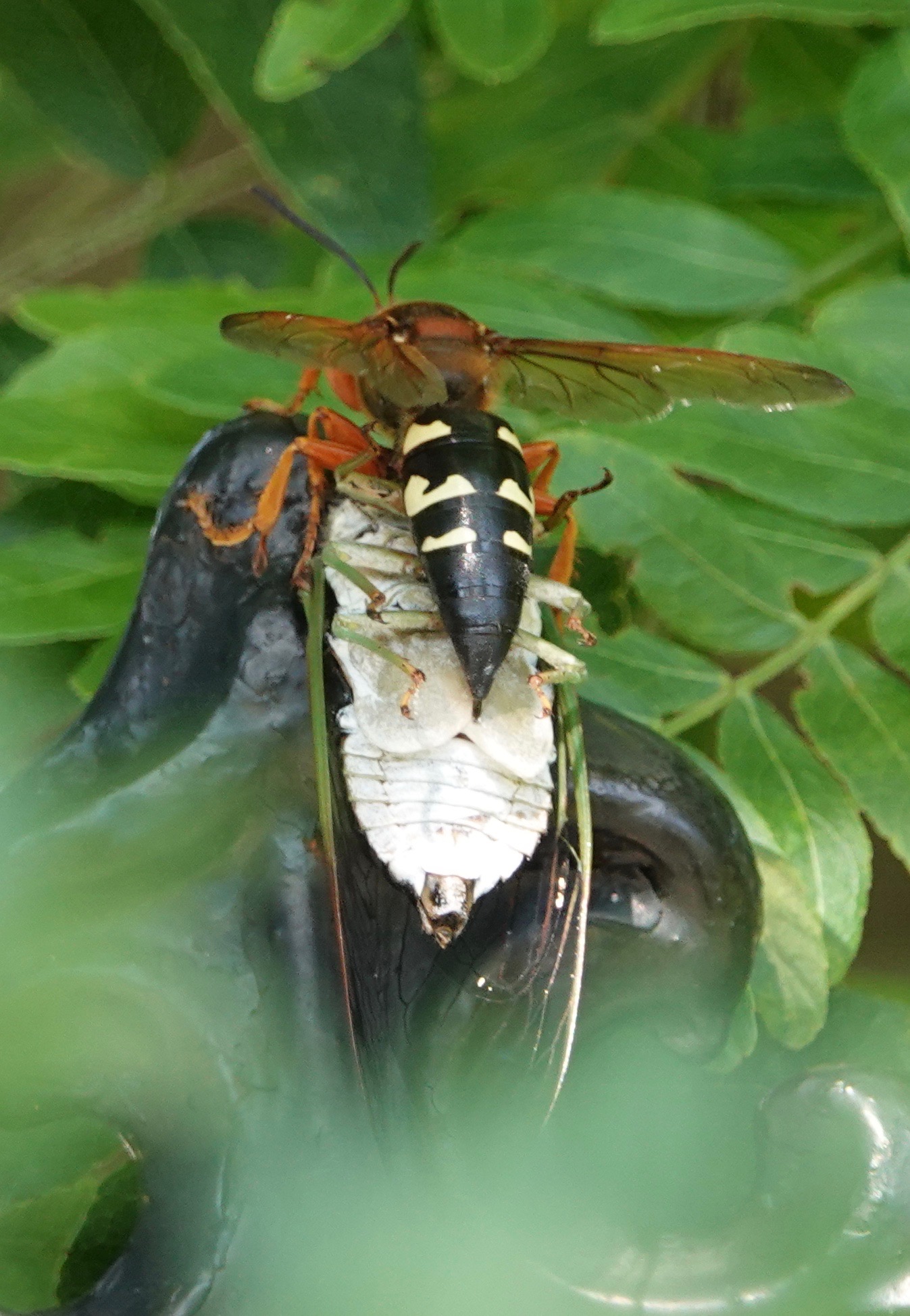
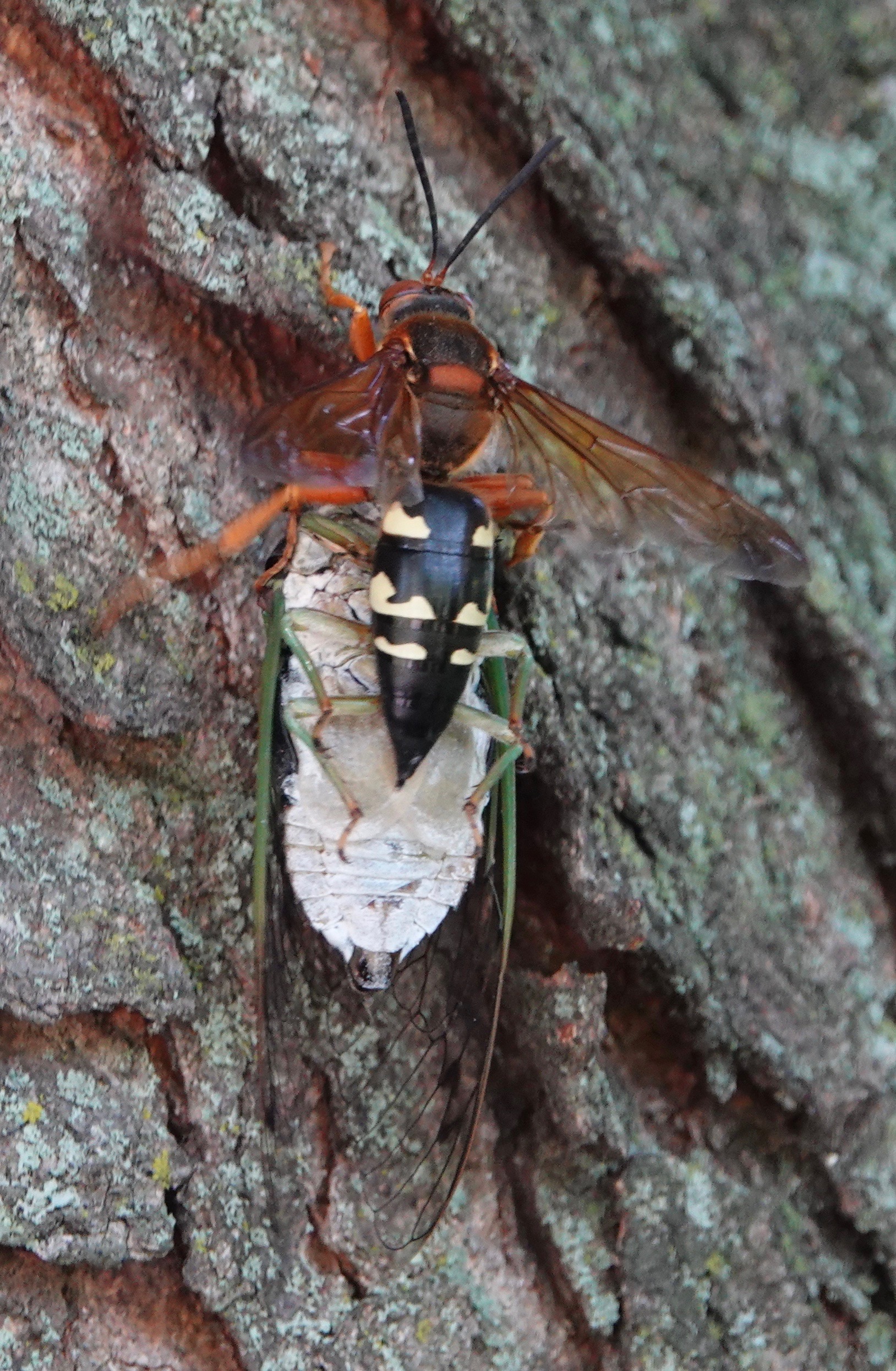
Cicada-killer Wasp with prey. Flying awkwardly with this heavy load of cicada, the wasp landed on this sign and started climbing up.
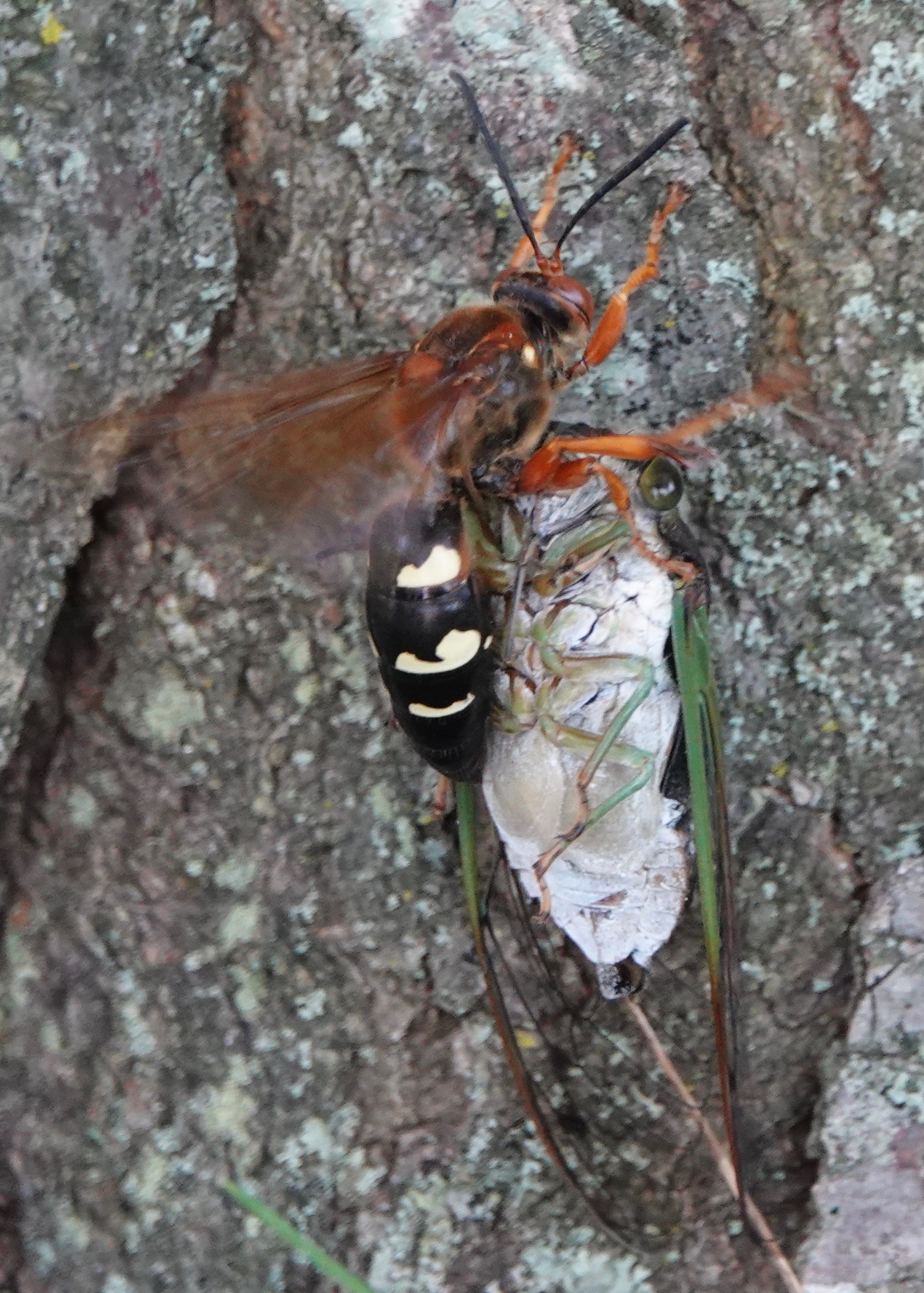
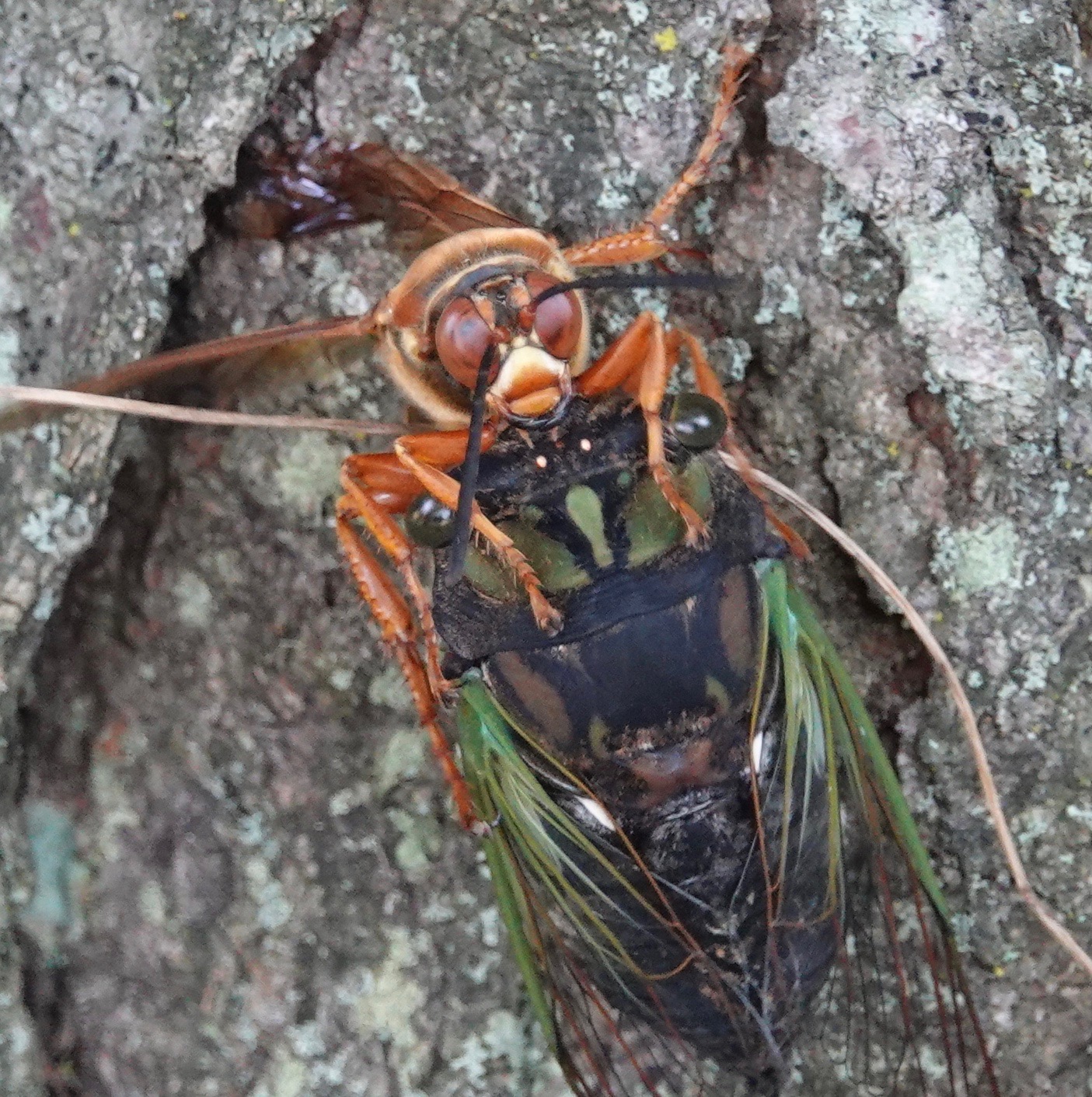
Holding prey, climbing, and wing flapping, the wasp now clamors up a tree trunk.
They nest in the ground, but some height should give this wasp an advantage to taking flight again.

The paralyzed prey will be dragged underground. The wasp will lay an egg on it. Once hatched, the wasp larva will have an enormous meal to eat before pupating into… an adult wasp who will emerge next year to go hunting cicadas.
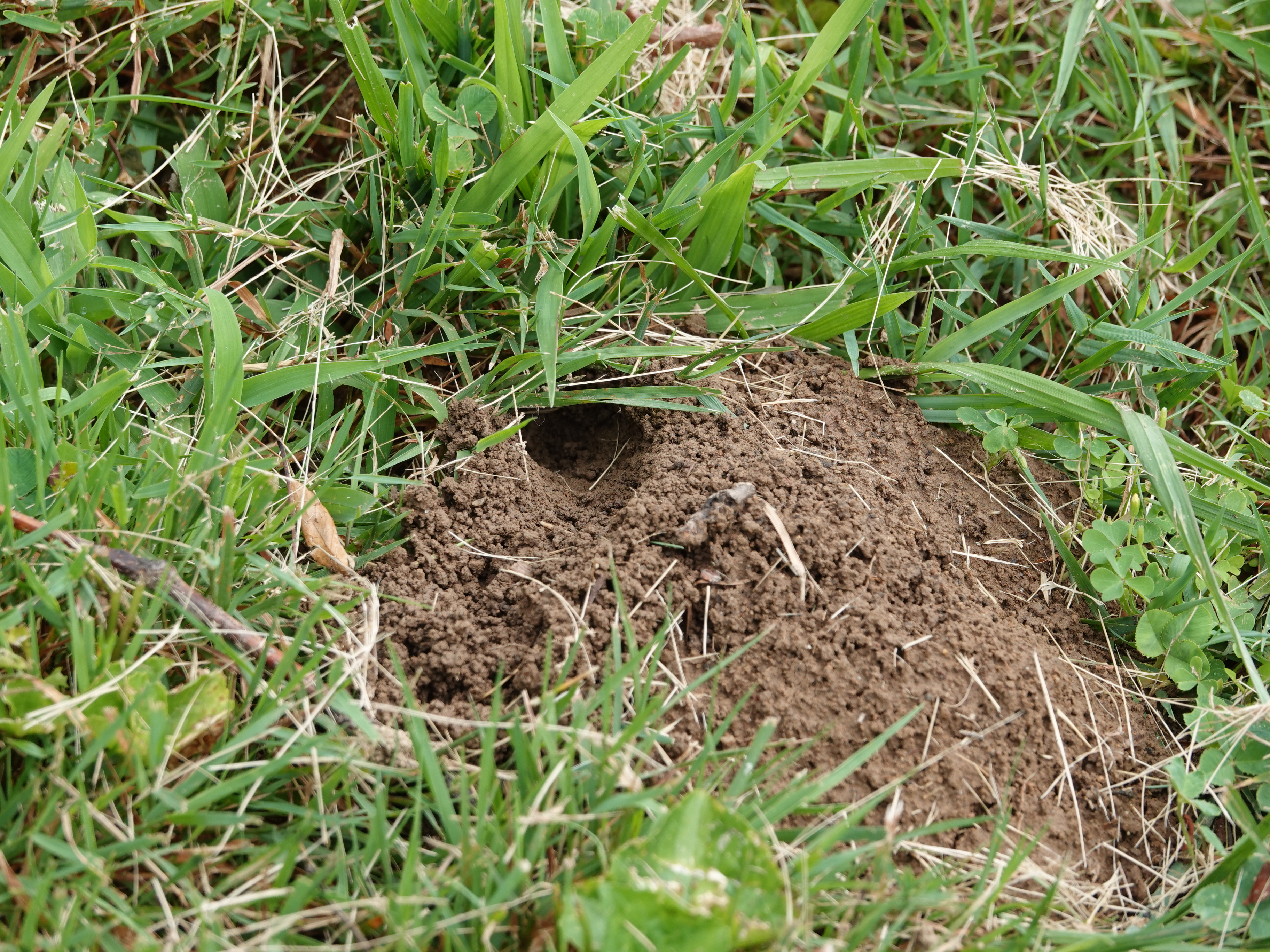
Cicaada-killer nest.

After yesterday’s post, a friend sent me this quote from Thoreau’s journal from Aug. 16, 1852: “These are locust days. I hear them on the elms in the street—but cannot tell where they are—loud is their song—drowning many others—but men appear not to distinguish it—though it pervade their ears as the dust their eyes.” HDT is using an old name for cicadas, “locusts,” which is now more common in the south than the northeast. Locusts are, in fact, grasshoppers.

One response to “Dazed”

  1. Chuck McAlexander

    I saw a Cicada-killer Wasp fly with prey to the entrance of a well disguised and pre-dug hole this AM in Central Park. The entrance was deep into some 6″ tall grass at the base of a fence and only given away by the dirt removed to make the hole. Two minutes later the wasp emerged and flew, presumably to find another cicada. It was 7:00 AM. I’m sure the wasp was only beginning it’s day’s work. How many cicadas will a c-killer put in a single hole? From the volume of soil removed I would guess there might be room for at least two and possibly three cicadas. Might there be an enlarged chamber at the end of the tunnel, or is the excavation just a hole big enough to maneuver with the cicada?

Leave a comment