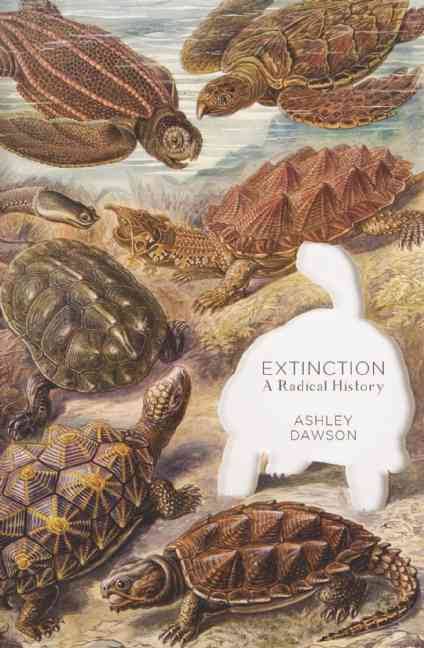
 Last Sunday, I discussed the enemy. Shall we call it capitalism? In his short book Extinction: A Radical History, Ashley Dawson certainly does. “Our economic system is destroying the planetary life support system upon which we depend.”
Is this a controversial idea? I don’t think so, but I suppose it will be met with resistance in some quarters. Certainly everywhere people went as they diffused across the planet, the large animals disappeared–except interestingly enough in the place we started–long before the capitalist system emerged. Some might point an accusing finger at agriculture and the complex, hierarchal societies that developed from the need to store and record grain surpluses and manage rising populations. Talk about terraforming! Yet where today is Mesopotamia (Humbaba may have had his revenge over Gilgamesh after all)? The breadbasket of Rome? Rapa Nui? The only place “we” didn’t destroy the megafauna was back in the cradle of Africa, but we’re catching up there now.
Yet capitalism seems a particularly virulent engine of planetary destruction, predicated on continuous consumption and constant growth, which as Edward Abbey pointed out was an impetus shared by cancer cells. Likewise, everything must be commodified: resources, certainly; but also genomes; personal and familial relationships; such givens of the commons as water. Recently yet another bottled water company has admitted it’s nothing but tap water in the plastic containers that will outlive all of us by generations upon generations.
Inevitably, the “tendency of capital accumulation to destroy its own conditions of reproduction” has resulted in our present condition: the sixth great extinction event on planet Earth.
I am always struck by the old echoes in the word consumption, which used to be a disease. Isn’t it still? The root of the word means a burning up from within; consumption the disease, better known now as tuberculosis, was seen as a consuming fire that wasted away the body. (Humans are such survivors that consumption, until it was beaten, temporarily, by antibiotics, was adopted as sort of fashionable pose, tragic yet worthy of operas.)
Now, one of the problems with fire is that it makes smoke. Pollution has long been capital’s smoke, from the toxins poured into the air, water, earth, and quelle surprise, human and all the other life forms, to the chemistry of fossil fuels itself. Human beings have never seen so much carbon in the atmosphere as there is right now.
(Next Sunday: the once and future world.)
 Backyard and Beyond
Leave a comment