Have you reached the anti-gift stage yet? Most of the crap that will be given with the best of intentions this holiday season will be thrown out soon, adding yet more to the garbage we so heedlessly produce and litter the entire world with. And this after the production of that needless junk has caused wanton environmental damage. Coming or going, the unnecessary, indefensible, effluvia of consumption (once a disease, always a disease): you’ll feel so much better when you just say “no!” to what are essentially “gifts of death.”
The best things in life, after all, aren’t things, but if you must give things, the hand- and home-made gifts are the ones that count. And books, the best food for the mind. Here are a few that have inspired me this year:
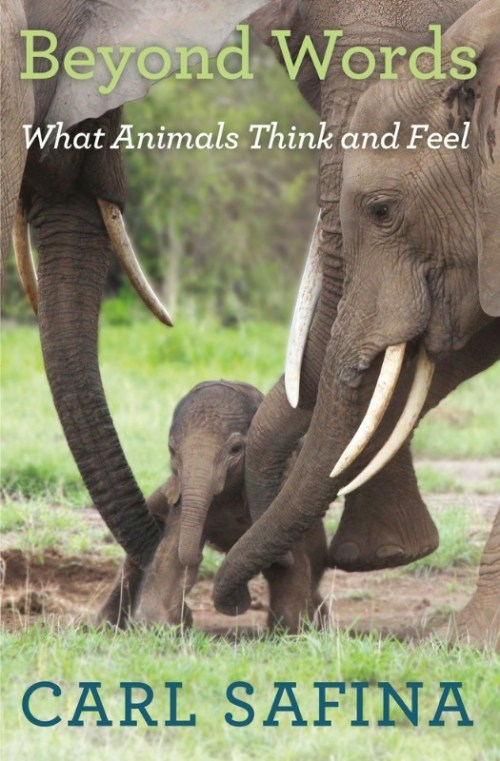 Carl Safina’s Beyond Words: What Animals Think and Feel may well be the natural history book of the year. It has certainly challenged and enriched me and made me think differently. I saw Safina lecture this week in person, and you can see a version of his talk, which I highly recommend, here.
If you think I can get a good rant going, you should try Joy Williams’s Ill Nature: Rants and Reflections on Humanity and Other Animals. She is particularly incendiary about hunting, or killing as she prefers to plainly call it, and has no truck with the likes of Ducks Unlimited, which works to conserve land and water… only to kill more ducks. 93% of us don’t hunt, and yet we’re held in thrall (as are all the federal and state agencies dedicated to helping hunters kill more animals) by this subset of the gun-nut psychosis.
Bill Bryson’s A Short History of Nearly Everything is several years old now but evergreen. This would make a great one for someone younger on your list, as well as an excellent refresher for everyone else.
(Speaking of what’s old being new again, here are all the books I’ve mentioned in these posts over the years for more inspiration.)
 Slightly off track, Ronald Blythe’s Akenfield: Portrait of an English Village is back in print. It’s an excellent antidote to too many Miss Marple mysteries and postcard-cute English villages.
After serving as a nurse during the Civil War, Walt Whitman suffered a stroke. His recovery included watching the natural world go by. Specimen Days, his collage-like collection of notes and reminiscences, moves from remembrances of New York and Brooklyn in the early 1800s to the bloody horrors of the war to the consolations of nature. “Literature flies so high and is so hotly spiced, that our notes may seem hardly more than breaths of common air, or draughts of water to drink. But that is part of our lesson.” The Library of America Whitman should be in every American’s library. Melville House’s Neversink Library edition is another great option.
*
It would, perhaps, not hurt to give the gift of my blog posts to someone you hold dear. Like Walt, I find much consolation in observing and learning about our world and trying to convey my discoveries to the public. And people have told me they enjoy getting my posts by email in the mornings. It’s often the first thing they look at before the onslaught of the day. That is as fine a gift to me as is imaginable.
 Backyard and Beyond
Leave a comment