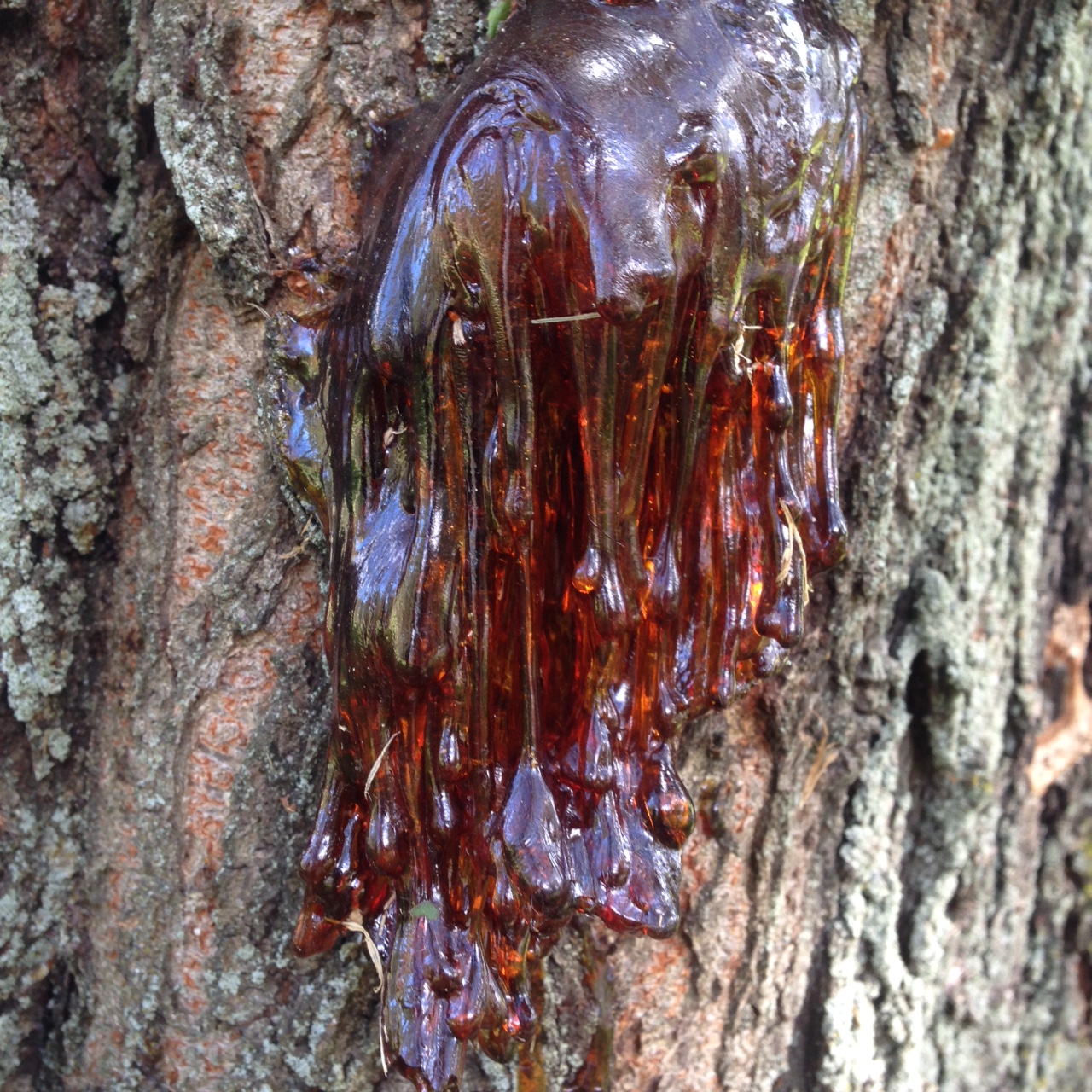
 A fist-sized clump of resin. Usually associated with coniferous trees, this frozen waterfall of hydrocarbons, and several others, were on a deciduous tree I couldn’t identify on the Lyndhurst estate in Tarrytown. (The grounds are a 19th century landscaper’s dream, rich with exotica.)
Resins seem to have a defensive function, battling insects and smaller threats. Better living through chemistry? Humans have long used such resins for incense (as in the biblical frankincense and myrrh) and perfume, varnish, and glues. Honeybees certainly exploit the prophylactic value of resin in their product propolis, which is used to reinforce their hives against harmful bacteria, parasites, and fungi.
And over the long, long haul, the wondrous substance amber is just resin plus time. The choicest pieces of fossilized resin, at least outside the jewelry world, have insects perfectly preserved inside of them. Insects tens of millions of years old and preserved down to the finest detail.
“Amber” is from the Arabic ‘anbar, and originally referred to what we now call ambergris, the strange intestinal product of sperm whales. There was a lack of knowledge over the source of ambergris, or grey amber, and since ambre jaune, or yellow amber, was also found washed up on the shore, they were thought to be related. As Melville noted, it was hard to reconcile the perfumes made with ambergris with the guts of a whale, probably harder to reconcile than rich scents from the blood of trees.
 Backyard and Beyond
Leave a comment