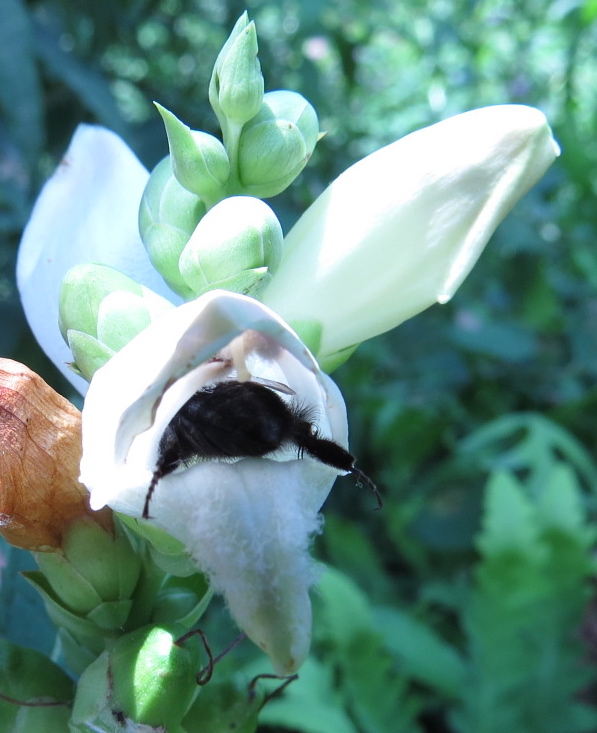
 A bumblebee rumbles into the heart of the flower.
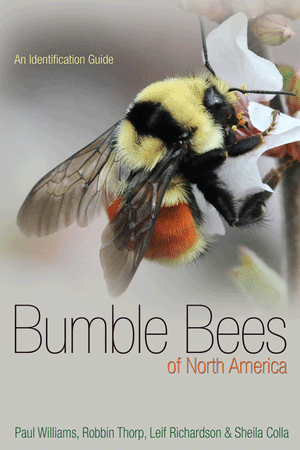 Identifying bumblebees of the genus Bombus is not an easy task. In their new identification guide, Bumble Bees of North America, Williams, Thorp, Richardson, and Colla note that color patterns “can be strikingly variable within species and strongly convergent between.” As an example of the variability within a species: for the Yellow-banded (B. terricola) they show five queen bee patterns, five worker bee patterns, and seven male bee patterns; they also note its similarity to five other species. Oy! From my limited experience, I’d go with the bee systematist they quote: the genus is “morphologically monotonous.”
This guide uses color patterns, but also tongue length and cheek size to break down the forty-six species in North America north of Mexico. (Also used to differentiate these are male genitalia and genetic evidence, things even more remote from field observation.) Measuring a bee’s cheek isn’t something a lot of amateurs are going to do (and never mind the knees!). 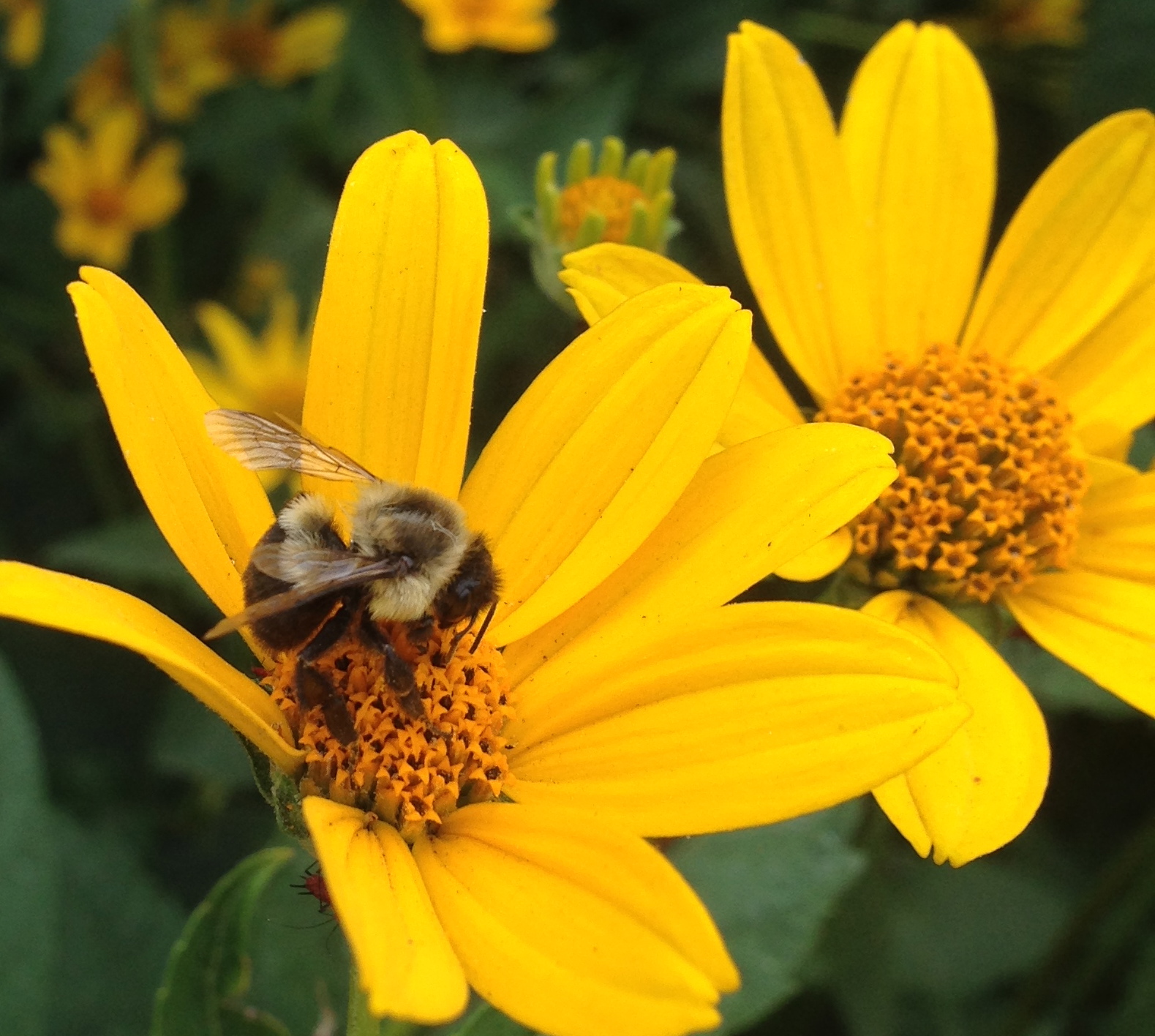 Many of you are doubtlessly aware of the importance of honeybees as pollinators, and how their numbers have plummeted because of Colony Collapse Disorder. But bumble bees are also used commercially in pollination, especially in greenhouses, where their services are worth $10 billion annually. Unfortunately, the bumble bee pollination industry has spread bee diseases through their practices, introducing hazards to wild populations around the world. World-wide, bumblebee populations are mostly in a bad way, due to habitat loss, insecticides, climate change, pathogen spillover, and the introduction of exotic/invasive species. Systemic insecticides used to treat seeds are particularly insidious, as they remain present throughout the growing plant, including the pollen and nectar gathered as food by bees; if not immediately toxic, these poisons can disrupt foraging and colony development over time.
Since the beginning of this century, one North American species, the Franklin (B. franklini) has had such a rapid decline it is considered close to extinct; another, the Rusty-patched (B. afinis) is the only bee on the federal endangered species list.
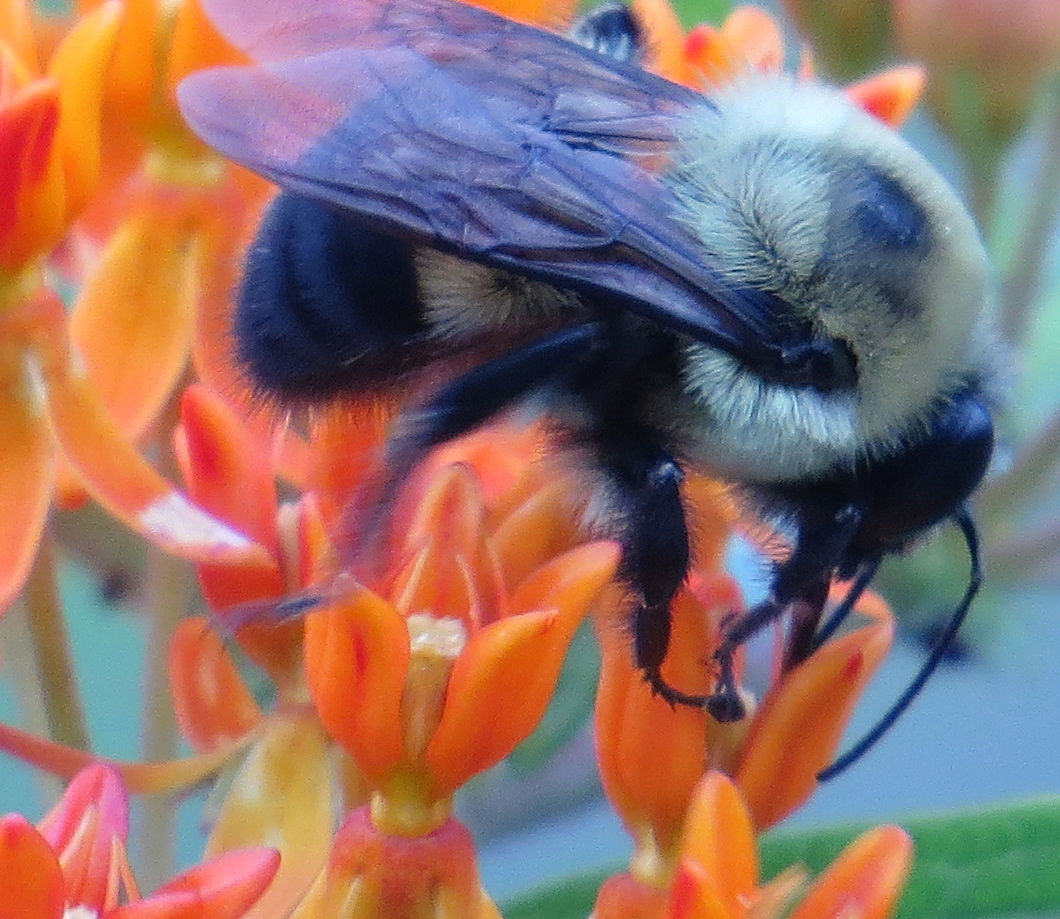
Among many things gleaned from this volume, I learned that Bombus diversity is greater in habitats with cooler temperatures and montane landscapes, unlike most other bees, who prefer warm dry, Mediterranean style habitat. The Polar B. polaris, for instance, is found across the far northern swath of the continent.
BTW:”Bumblebee” seems more English English; “bumble bee” more American English. 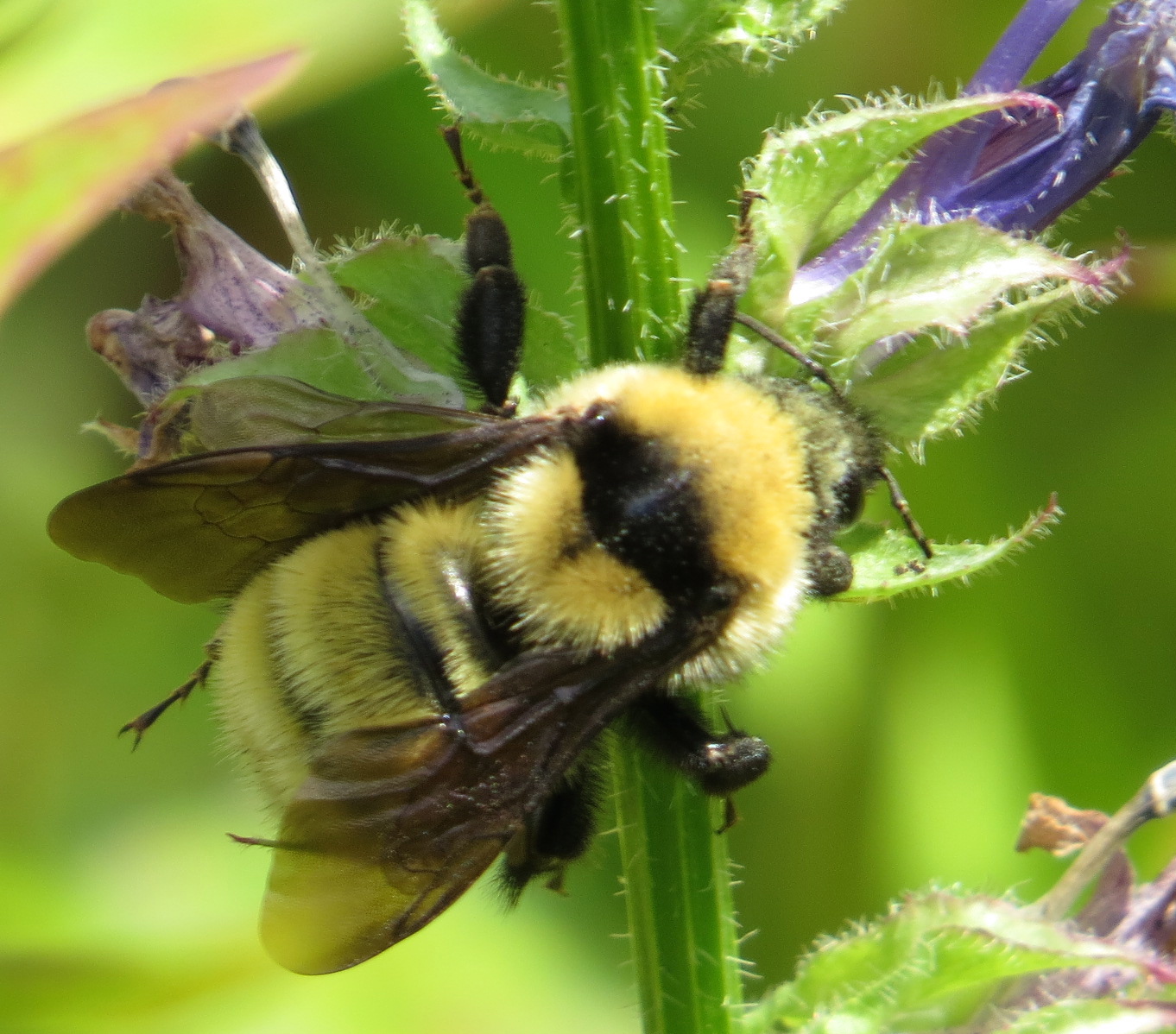 Photos taken around Brooklyn in recent weeks. Join me next Wednesday at Brooklyn Bridge Park where we should see a few late afternoon bumblers. Also, could it possibly be that you aren’t subscribing to these posts yet?
 Backyard and Beyond
Leave a comment