“Fledge” has an ancient sound in my ear. The OED records the word back to late Middle English with roots in Old English and Latin, corresponding to similar words in English’s cousins, Dutch and German, for flight. It means to acquire the feathers necessary for flight, and has been allegorized to youth, inexperience, and, in Shakespeare, the lack of facial hair. 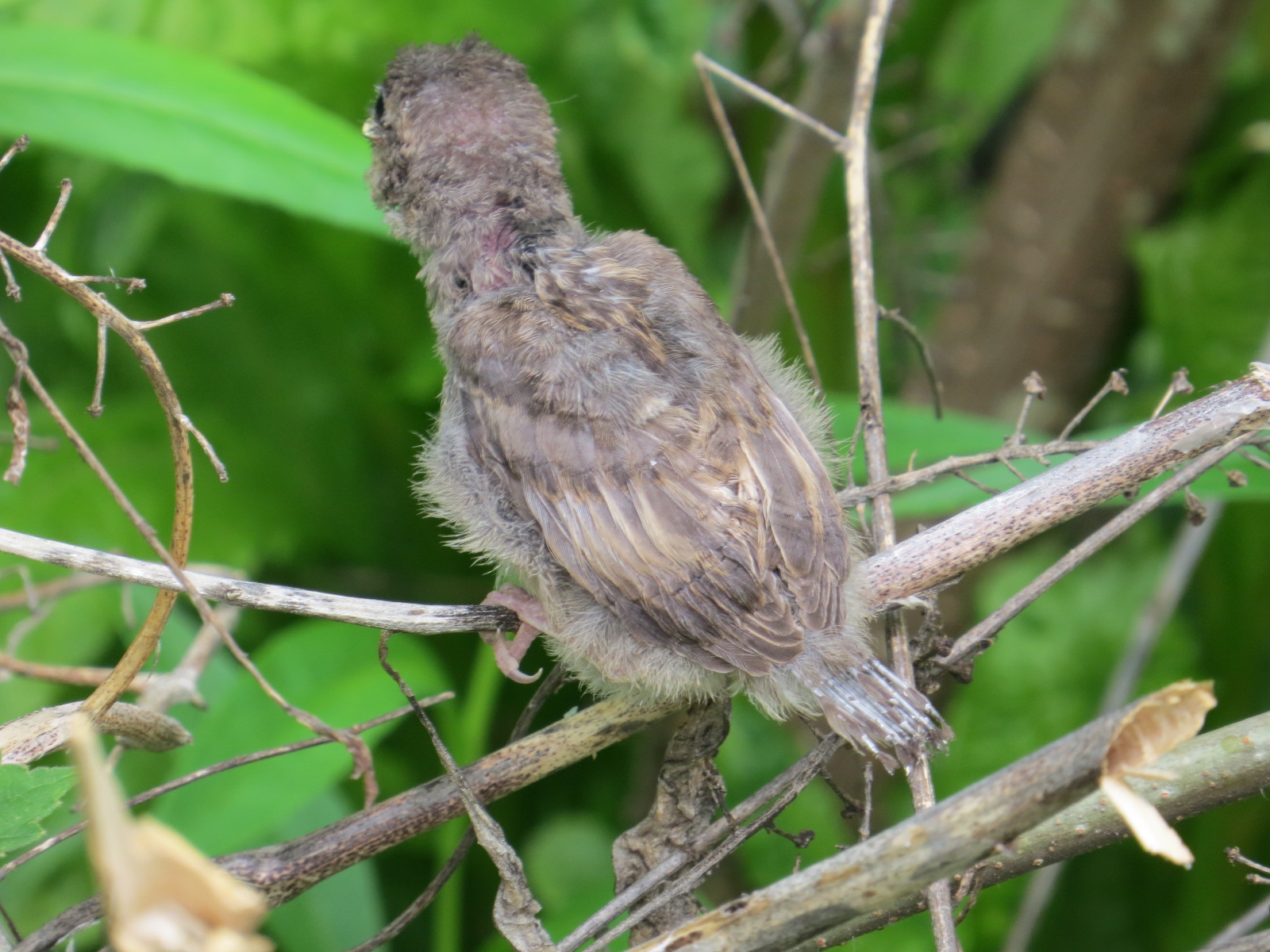 This House Sparrow (Passer domesticus), although out of the nest, hasn’t fledged yet.
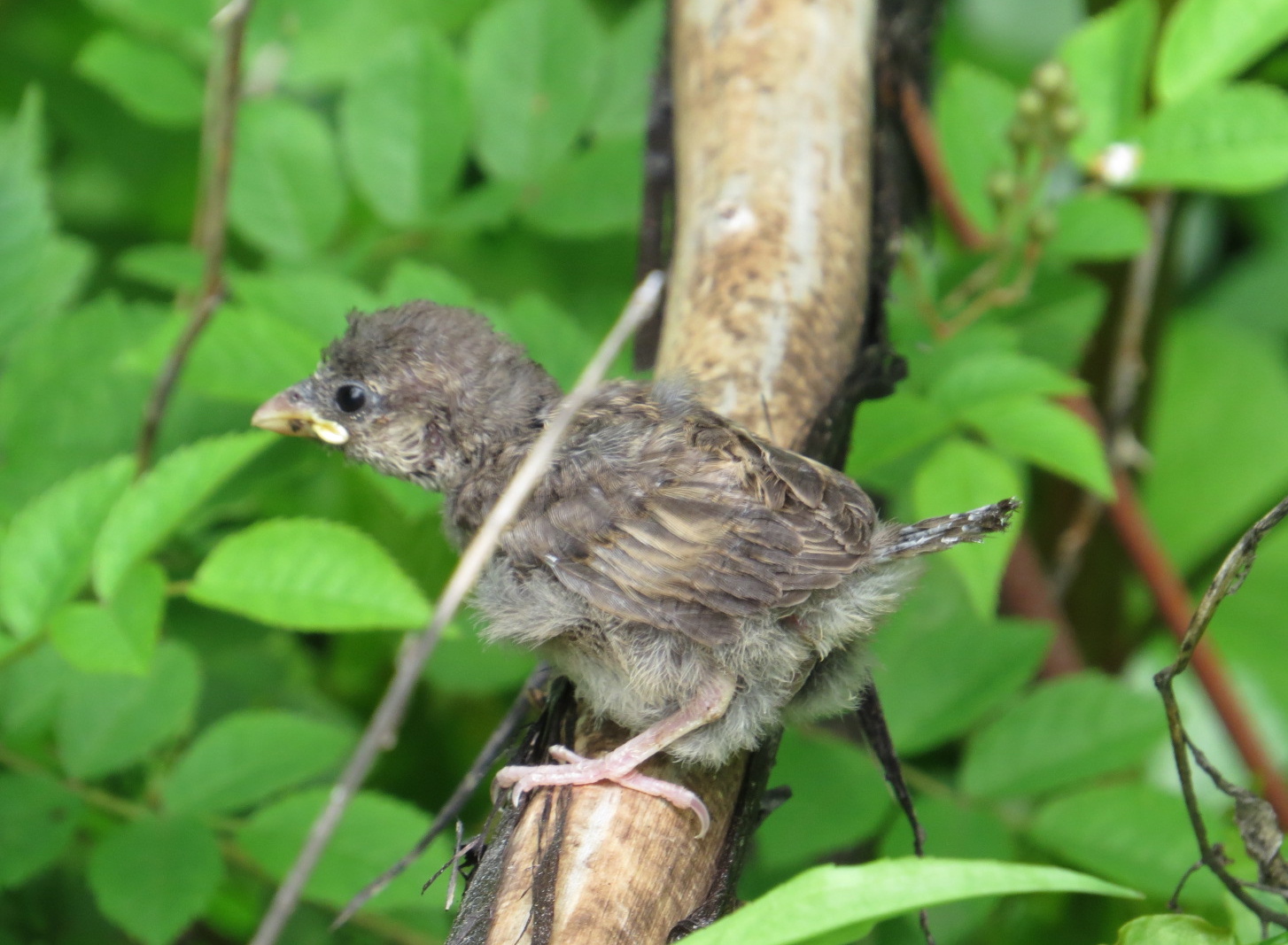 With barely any wings, nothing but a nubbin of tail, it’s mostly hopping at this stage.
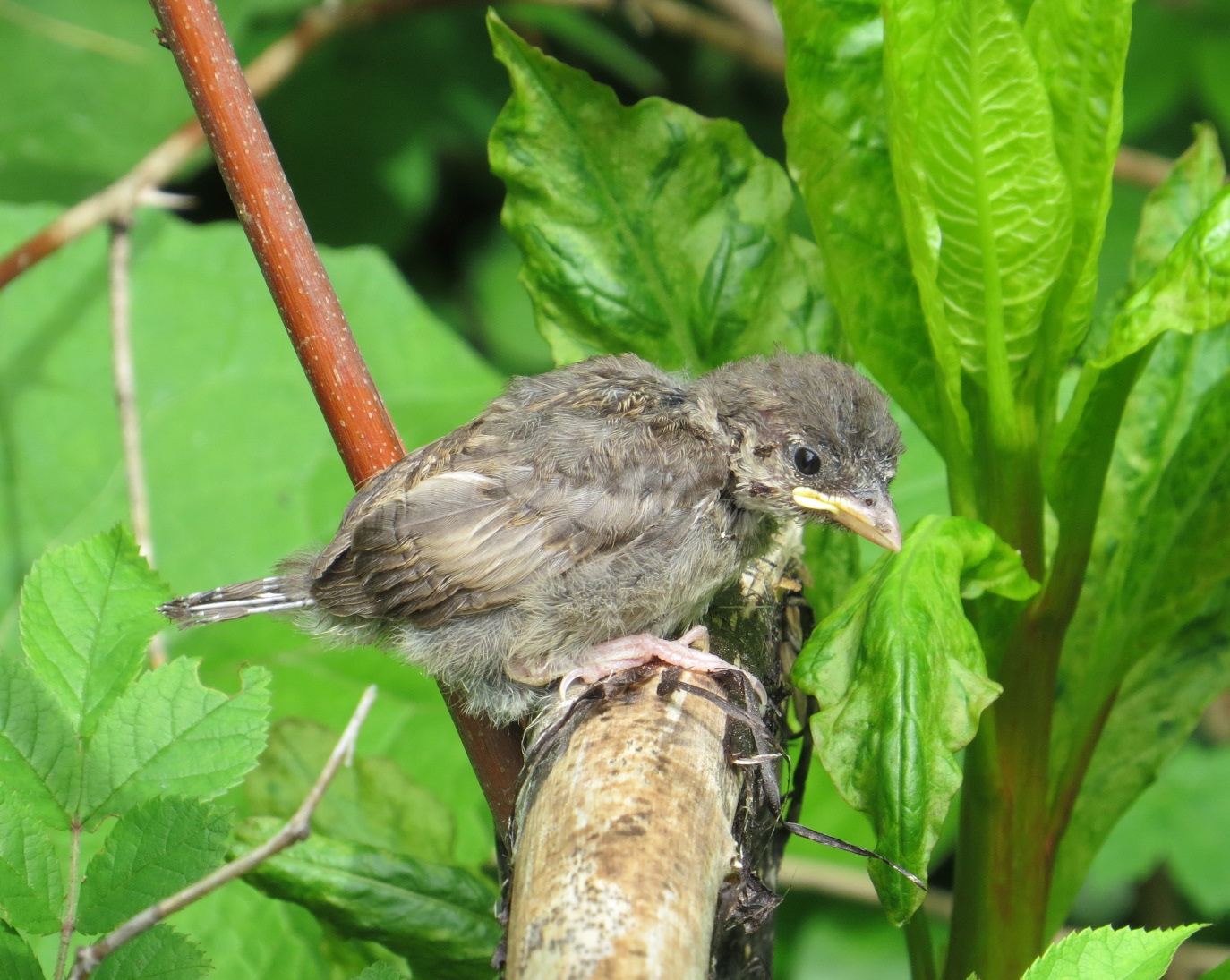 And eating, eating, eating. One of the parents had just stuffed something into its maw.
This is the time of year such helpless-looking chicks will be seen out of the nest. Well-meaning people sometimes mistakenly believe such birds need help; they do, but from their parents, not us. Their parents are near-by, but, being wiser than the young, are hiding from us. It is usually best just to withdraw and let the birds do what they’ve always done. (I’m assuming that your cat is indoors, where it should always be.) Check out this page for more information about nestlings on the ground.
 Backyard and Beyond
Leave a comment