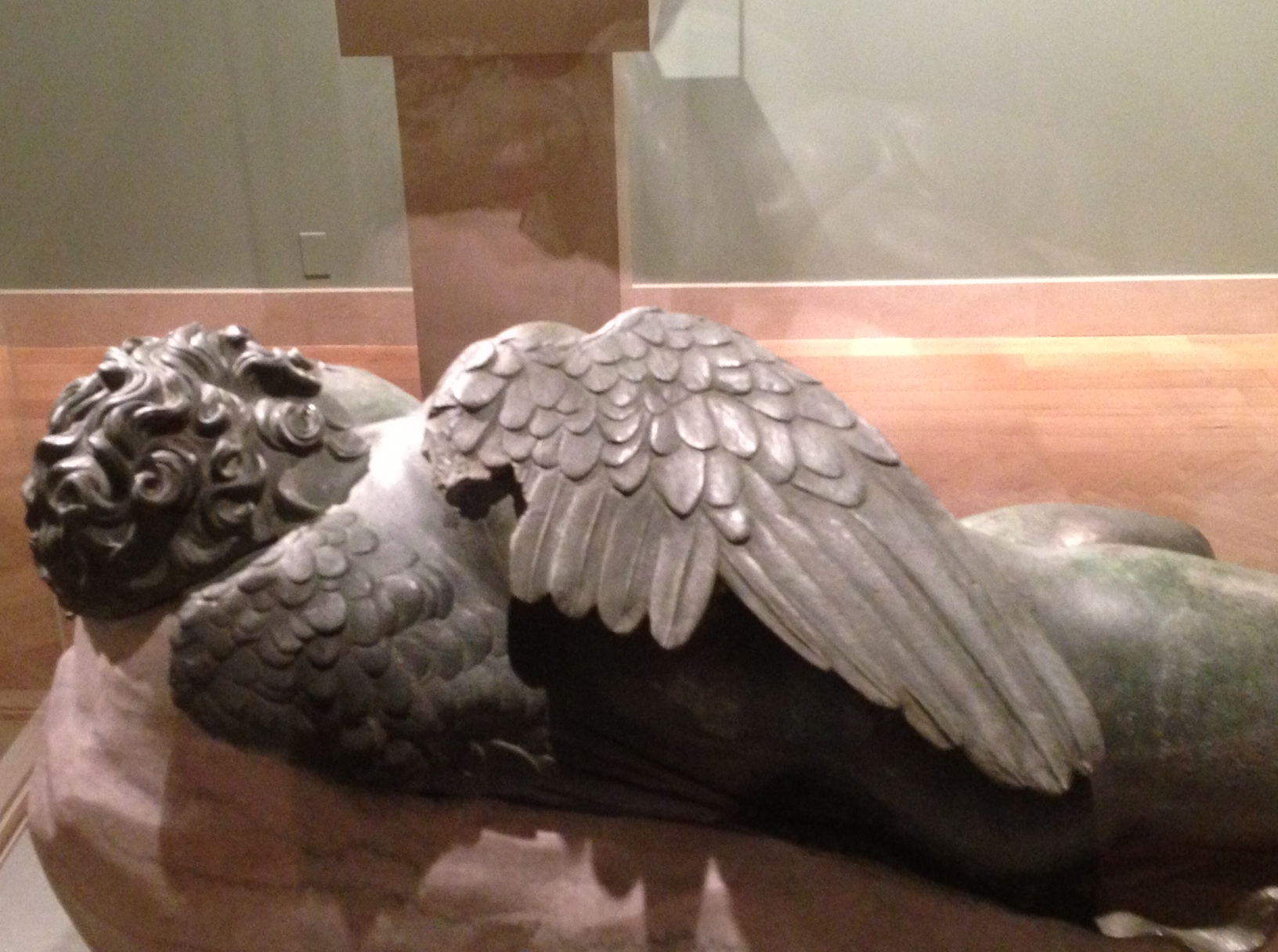
 How the mighty have fallen. Eros, the Greek god of love, was originally one of the primordial powers, portrayed as a cruel winged youth against whom neither immortal nor mortal was safe. By the Hellanistic period, however, he had been domesticated, and turned into a plump baby-like figure, the son of Aphrodite, of which this astonishing bronze in the Met is a preeminent example. His quiver of arrows still sting, but, sleeping innocently, he is far from the destructive being of his origins. His translation to the Roman Cupid was easy. From there, he becomes the fat, tumbling putti of Christianity, a telling transformation.
So what is he doing here, besides it being winter still and hard to get living content out there in the world? Those wings, of course. This Eros is dated 3rd to 2nd century BC. The rendering of the wings is good, relatively life-like, and, of course, utterly absurd. I mean this in the practical sense. No baby — much less a bronze one! — would ever get off the ground with those wings. Most birds are extremely light: a blackpoll warbler adds up to half an ounce; a big raptor like a bald eagle may weigh as much as 10 pounds, and, not inconsequently, has a 6-foot-plus wingspan. The human desire to fly — surely it started with marveling at the flight of birds — would have to wait technological ability.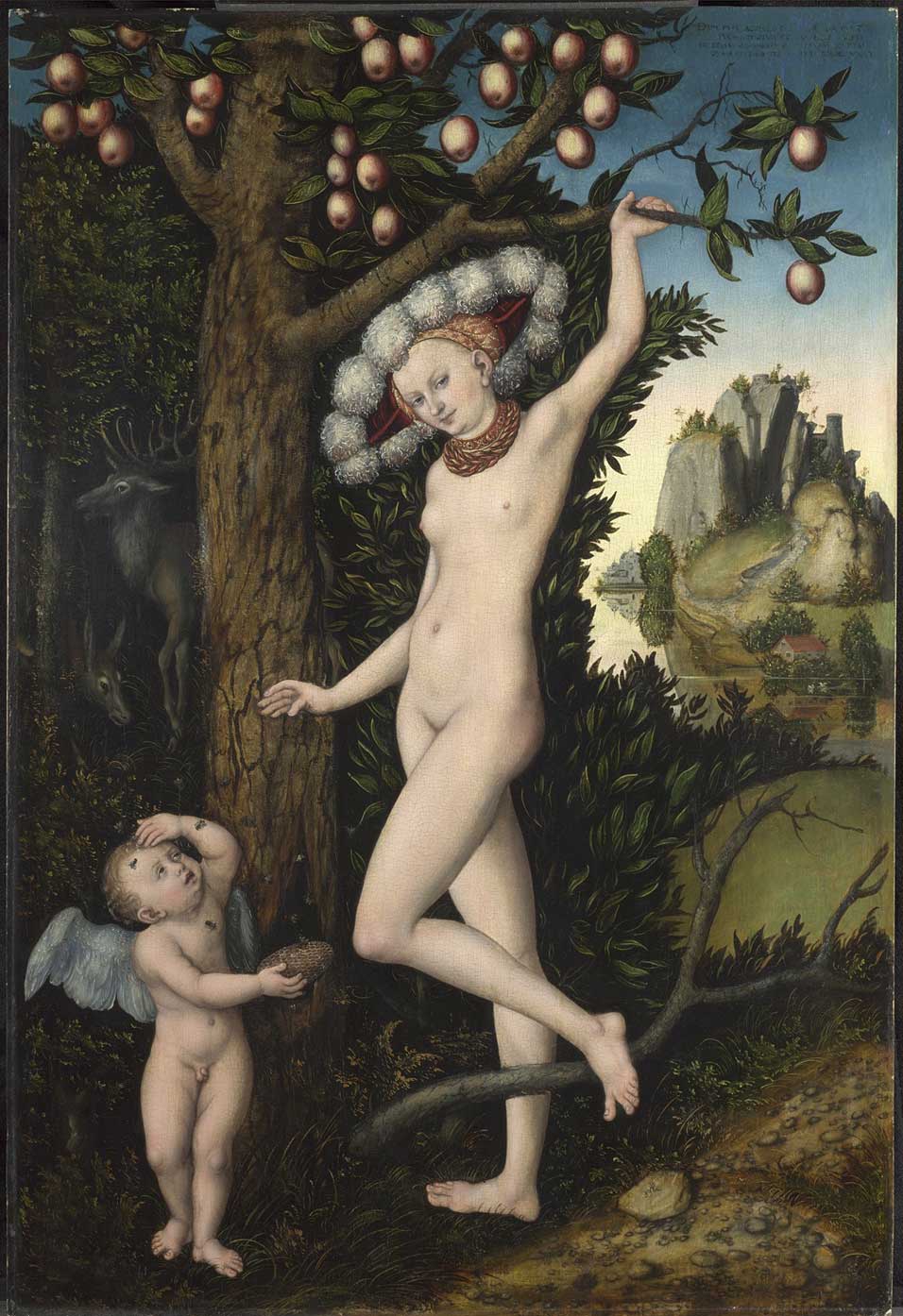 Cupid Complaining to Venus by Lucus Cranach the Elder. About 1525. The meddlesome sprite has been stung after breaking into a hive and now has the gall to go crying to his mommy. Life’s pleasure is mixed with pain goes the moral. Looks to me like Cranach got his honey cake and ate it, too.
 Backyard and Beyond
Leave a comment