 The Cliff along Nantucket’s north side is a time-and-tide whittled slice through the north side of the terminal moraine, the long pile of glacial till left over when the ice retreated. Long Island was made the same way, and its north side has cliffs like these, too. The cliff here is eroded by the sea, and the mansions atop it are as permanent as Ozymandias’ shining city in the desert.
A beach makes you think of impermanence. Last year’s Bank swallow nests. No sign of any this year, yet.
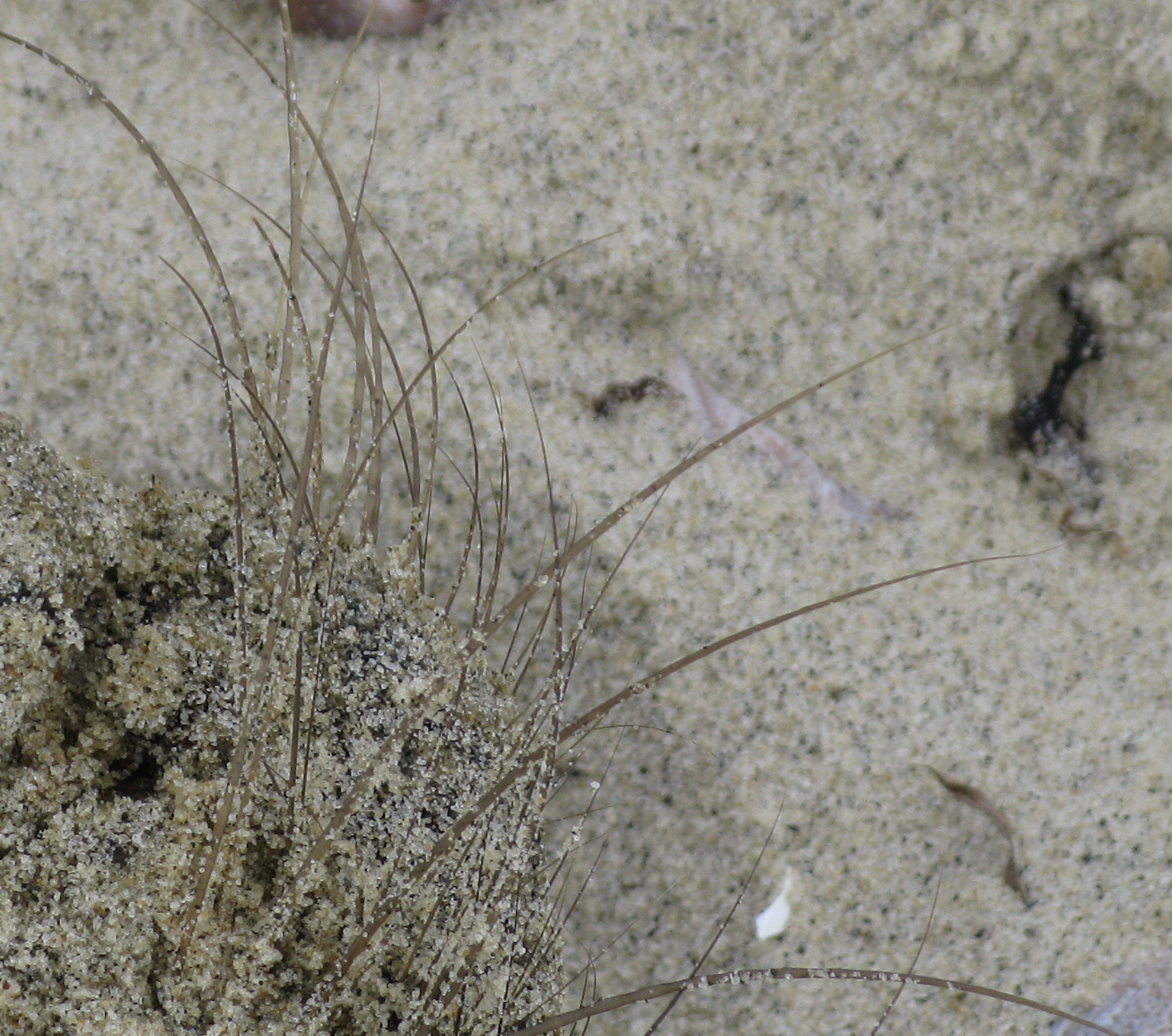 This one might puzzle you. It’s the snout of a Harbor seal, with the whiskers in remarkably good condition, considering parts of the skull were exposed to bone.
 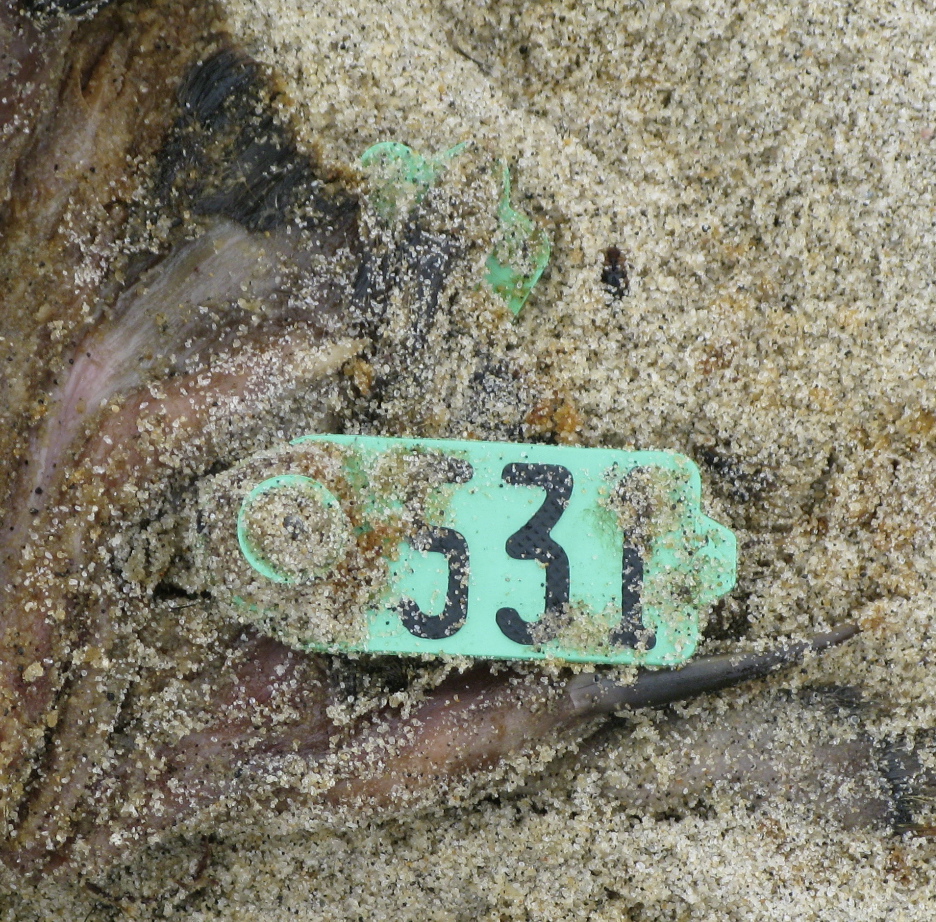 Both feet were tagged. I reported this color/number to the New England Aquarium, which is the HQ for the local Marine Mammal Rescue team; the person I talked to there thought this was probably a pup born this winter (although badly decomposed, it did look rather smaller than some other seal remains I’ve come across) and tagged on Muskeget, which is a small island to the west of Nantucket with a thriving Harbor seal population (much to the loathing of local fishermen, who can’t abide competition).
  Bill of a Great Black-backed Gull, the largest species of gull in the world. Although the underlying structure of the upper and lower mandibles of a bill are bone, they are covered in keratin, nature’s wonder protein.
 Horseshoe Crab shell, completely cleaned out, perhaps by a Great Black-backed Gull, and posed on the fence by me.
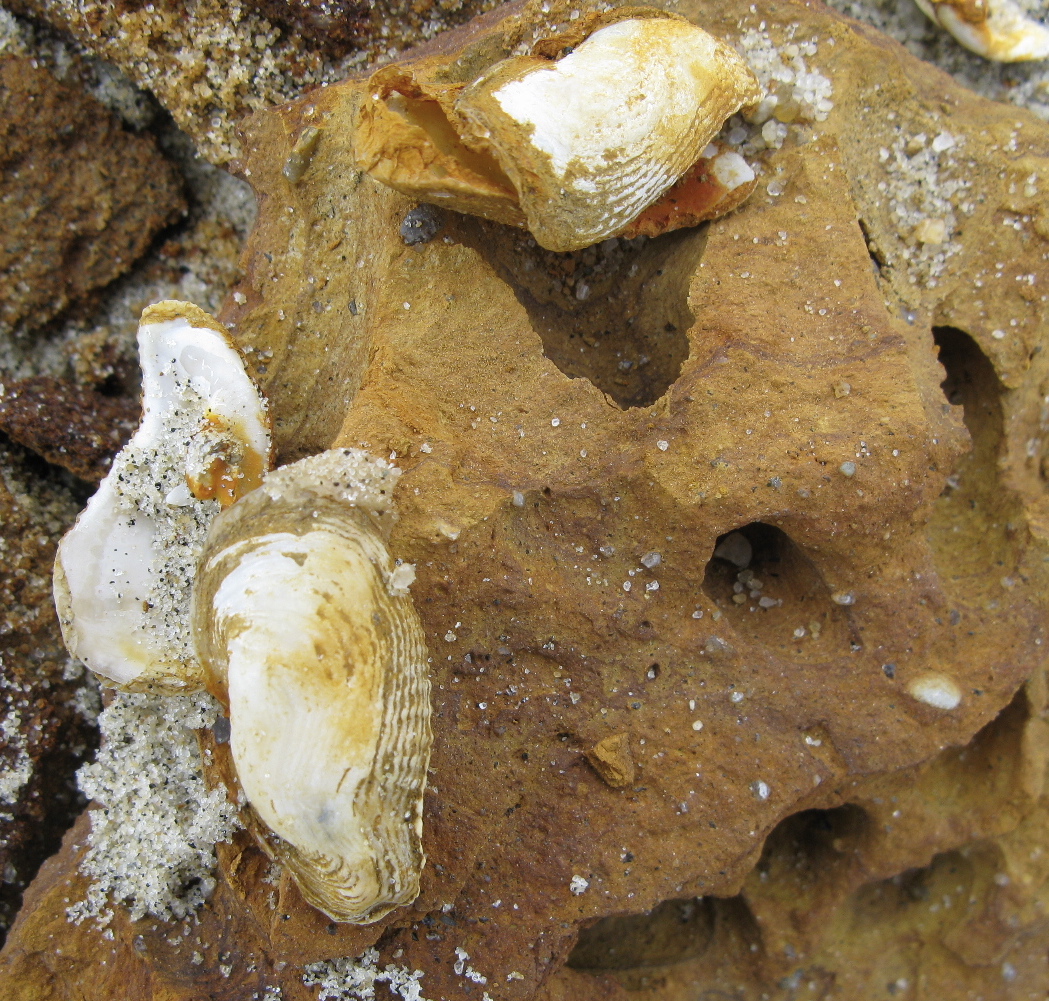 Seams of clay run through the cliff, and you find pieces of rock on the beach that look like baked clay, with a lot of iron in them (some nearly sienna in color). I need a geologist to walk this beach with me. The material is easily broken by whacking it against another rock. This piece was riddle with circular tubes, and inside the tubes I could see what turned out to be some kind of bivalve when I broke them open. I guess that they borrowed into clayey mud that later hardened. I also need a conchologist.
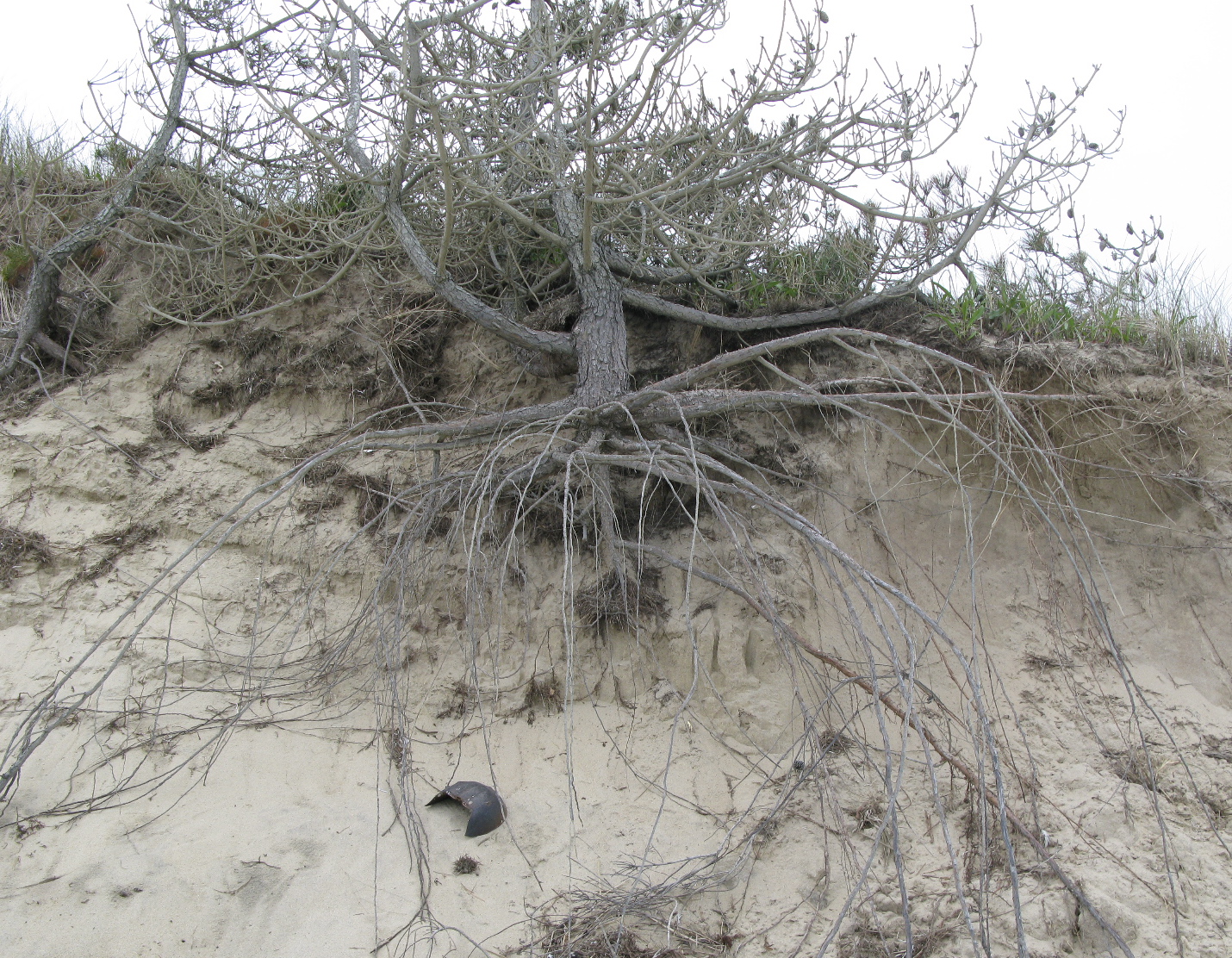 This pine held on — though dead, it still hangs on, even though most of the cliff has disappeared underneath it. But a few interesting little round fungi were growing on it.
 Backyard and Beyond
Leave a comment