Starting out from Brooklyn, an amateur naturalist explores our world.
As John Burroughs said, “The place to observe nature is where you are.”
Lifelines
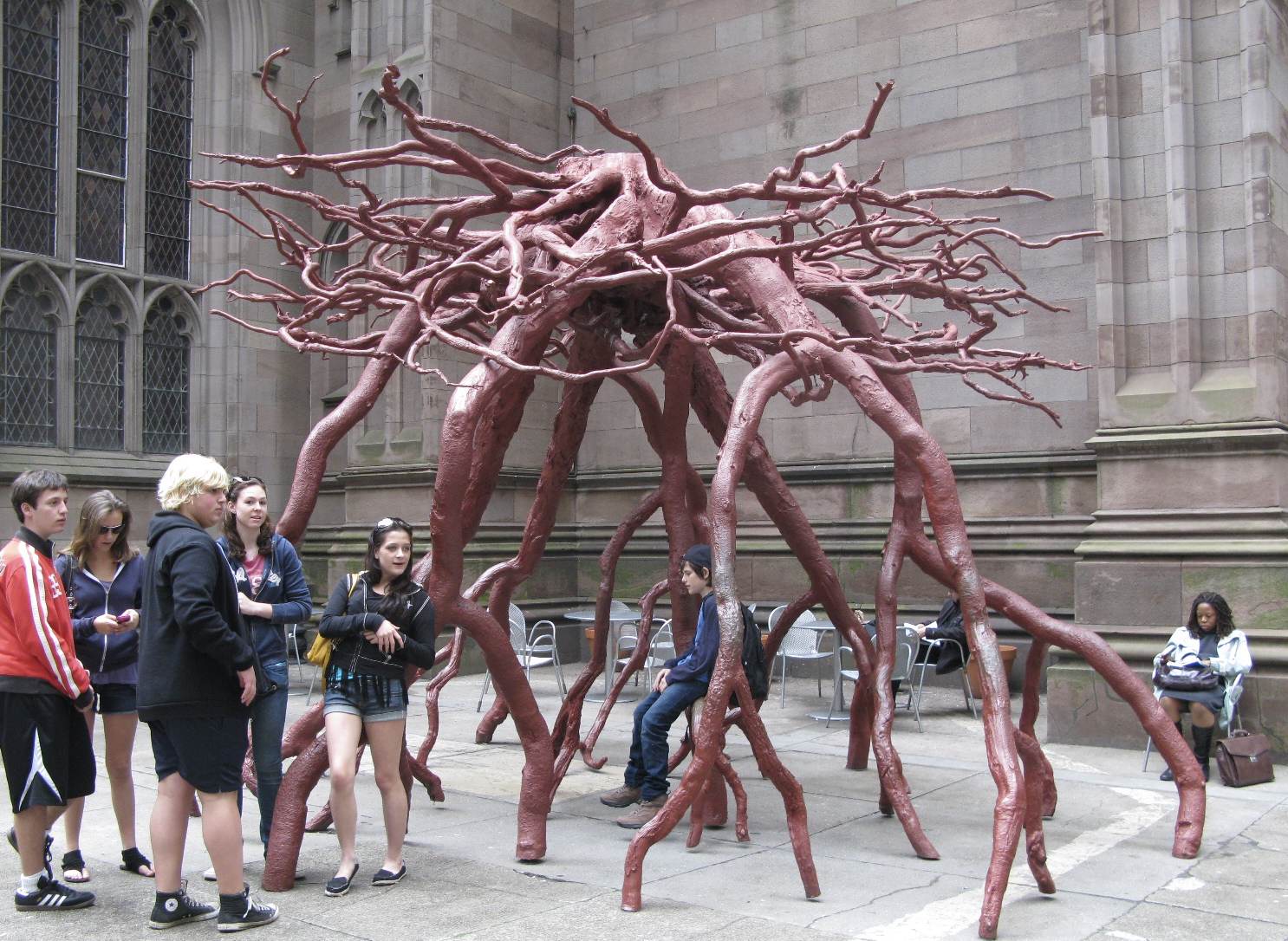
James Tobin’s sculpture Trinity Root, inspired by a sycamore in St. Paul’s Chapel graveyard that was felled on September 11, 2001.The usual notion of a tree root is that it has a large root mirroring the trunk, running as deep underground as the trunk runs up into the sky. Or, like Tobin’s sculpture, it has a series of deep roots, but that’s his artistic license, not to mention a practical way of allowing people to walk through and sit upon this sculpture. Few tree species have these legendary taproots. Most of a tree’s roots are within two feet of the surface. You can see this plainly when a tree is uprooted in a storm or erosion and wind conspire to topple it. Clipped recently from the underside of an uprooted tree: a bit of a tree’s rhizosphere, or root system. This is where the fungal mycorrhizae and root team up to provide water and minerals for the tree, carbohydrates for the fungus. Just as we humans are actually a sort of colonial life form, inseparable from our bacteria, trees are a complex system of life forms working together.
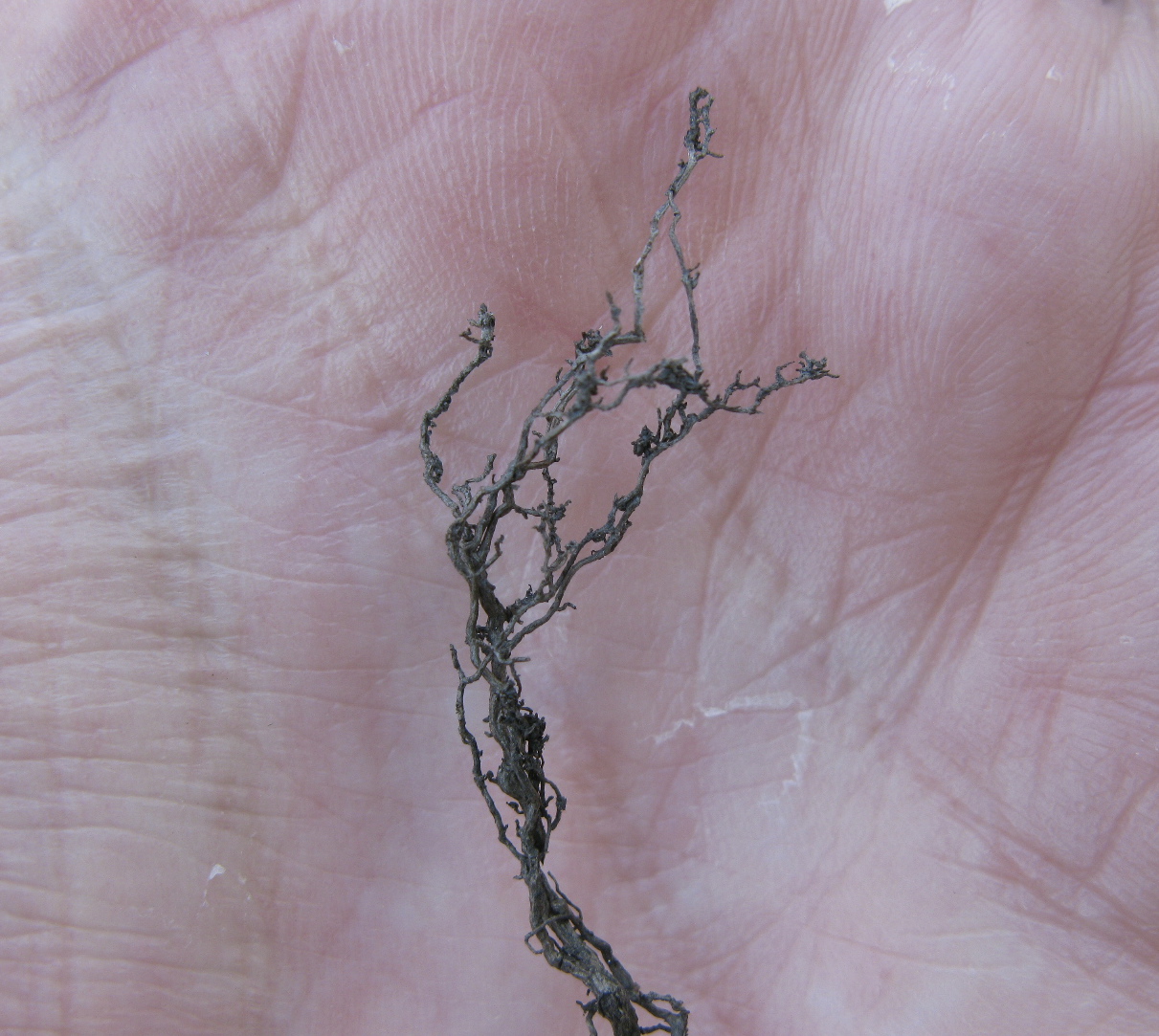 Clipped recently from the underside of an uprooted tree: a bit of a tree’s rhizosphere, or root system. This is where the fungal mycorrhizae and root team up to provide water and minerals for the tree, carbohydrates for the fungus. Just as we humans are actually a sort of colonial life form, inseparable from our bacteria, trees are a complex system of life forms working together.
 Backyard and Beyond
Leave a comment