Backyard and Beyond

Starting out from Brooklyn, an amateur naturalist explores our world.

As John Burroughs said, “The place to observe nature is where you are.”

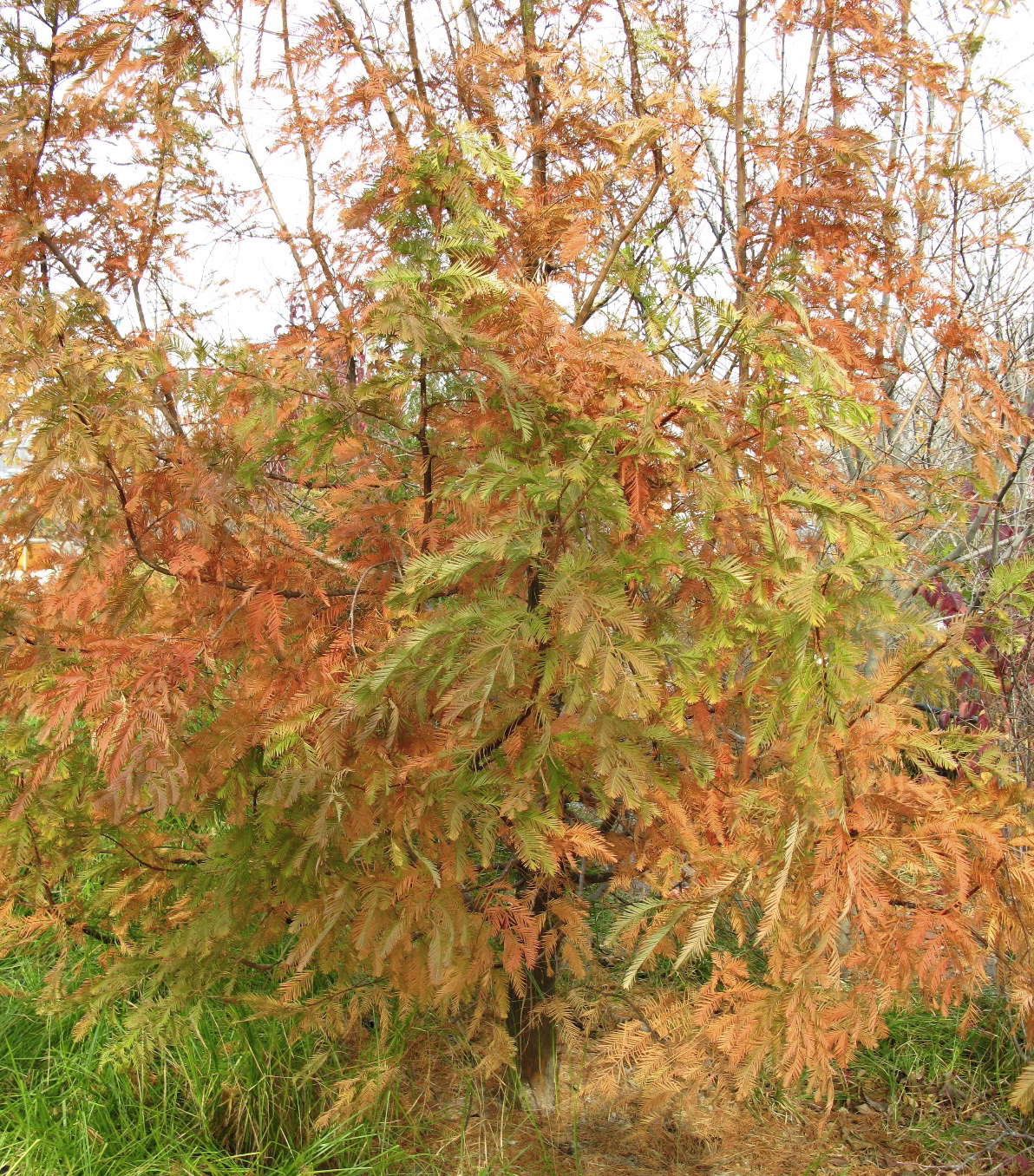
December Color

Baldcypress, Taxodium distichum, at Brooklyn Bridge Park.

Pop Quiz: The “baldy cypress” is common in its native swamp habitat in the southeastern U.S., and rather less common as a street tree here in NYC. But why, since our streets are only metaphorically swampy — usually — should this species do well here at all? If you care to answer, do so in the comments.

7 responses to “December Color”

  1. Hmm, great question Matthew. I’d guess that perhaps really poor hardpan soil with asphalt not far below, or whatever crazy ersatz soil mixture they’ve dumped on the old piers of the BB Park somehow mimic the environment of stagnant water? About 25 years ago, on my first visit to Cape May, I recall finding a little book about unique trees of the Cape May area, and going to see NJ’s largest baldcypress in a little swamp somewhere. . . Thanks so much for your wonderful reflections! Cheers, Kevin Dann

    1. You’re welcome, Kevin. As you can see from the other comments, you’re on the right track. Turns out they do well in both water-saturated and dry, compacted soils, both of which are relatively anaerobic.

  2. If you look at the state-clickable USDA map at

    http://plants.usda.gov/java/profile?symbol=TADI2

    you’ll see that New York State is at the northern end of the tree’s range. Here in central Texas, at the diagonally opposite end of that range, the most common place to see bald cypresses is not in swamps but along creeks:

    Bald cypresses on Onion Creek

    It’s one tree I count on for colorful foliage, as you can see at

    A different sort of rainbow

    1. Thanks, Steve.

  3. 2007’s Urban Tree of the Year. Its claim to the title probably resides in its tolerant nature – does well in much of the U.S.; tolerant of compacted soil, salt, drought (and of course flooding); will grow in most soils – clay, sand, loam; roots don’t bump up the sidewalks; relatively maintenance free, needing very little pruning, and not subject to breaking. I would suspect the small leaves would also be a good feature, since they would tend not to clog up storm trains as much as a clump of large oak or maple leaves would.

    1. Thanks, Elizabeth. Compacted soil is what what we share with the swamps and the drylands

      The tree also has a lovely conical shape when young. And young is relative, of course, since one of these pyramids towers over the backyards of a neighoring block in Cobble Hill. One downside of the tree is sillily aesthetic: they are late bloomers, and hence look dead, or “bald” deep into the spring.

  4. Not so much compacted soil in a swamp, but swamp soils and compacted soils share one key feature… low levels of oxygen in the soil… waterlogged soils hold less oxygen, and what little is there gets used up in decomposition, so anoxic conditions (and all those smelly compounds produced by anaerobic bacteria as they slowly continue the decomposition process…) are diagnostic of wetlands like swamps. Wetland plants are adapted to these conditions. Many have special vacuoles in their cells which allow oxygen to reach the roots from tissues above the water. Compacted soils in urban tree pits suffer from the same low oxygen conditions…

    Bald Cypress is a beautiful tree in every season, and one of my favorite natives. The Bald Cypress on my old block in Prospect Heights survived the microbursts and tornadoes of a few years ago better than the Bradford Pears for sure.

Leave a comment