
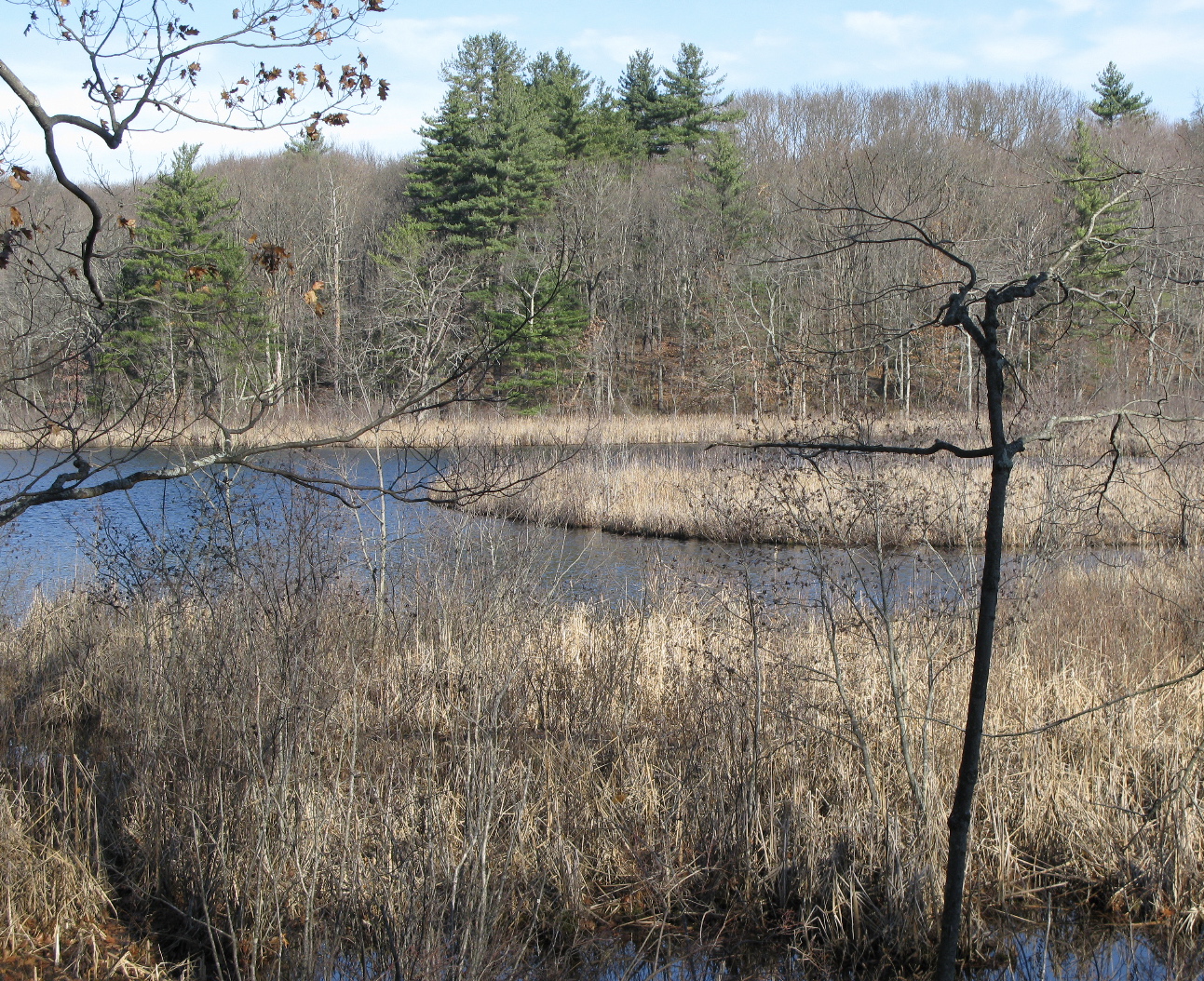
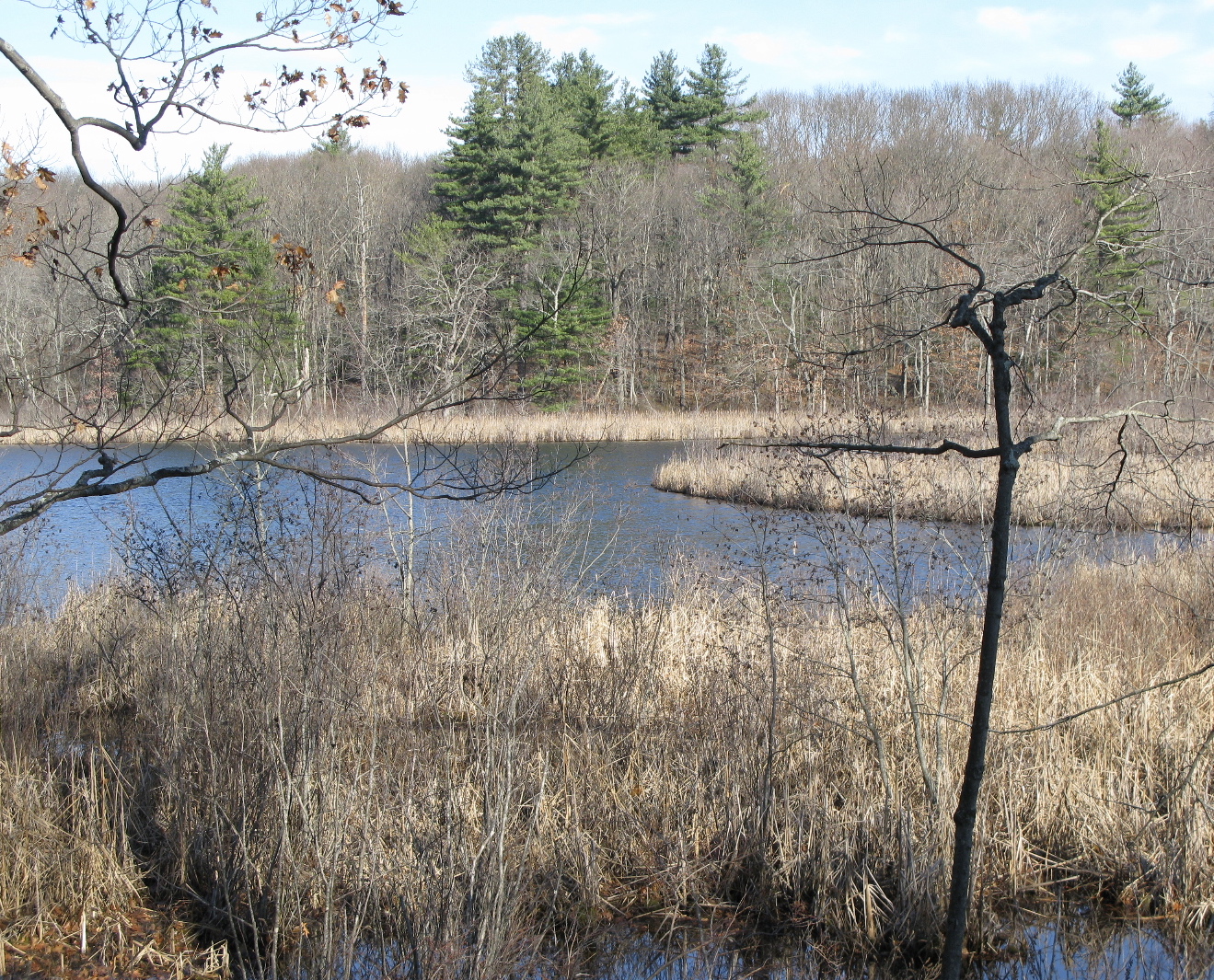
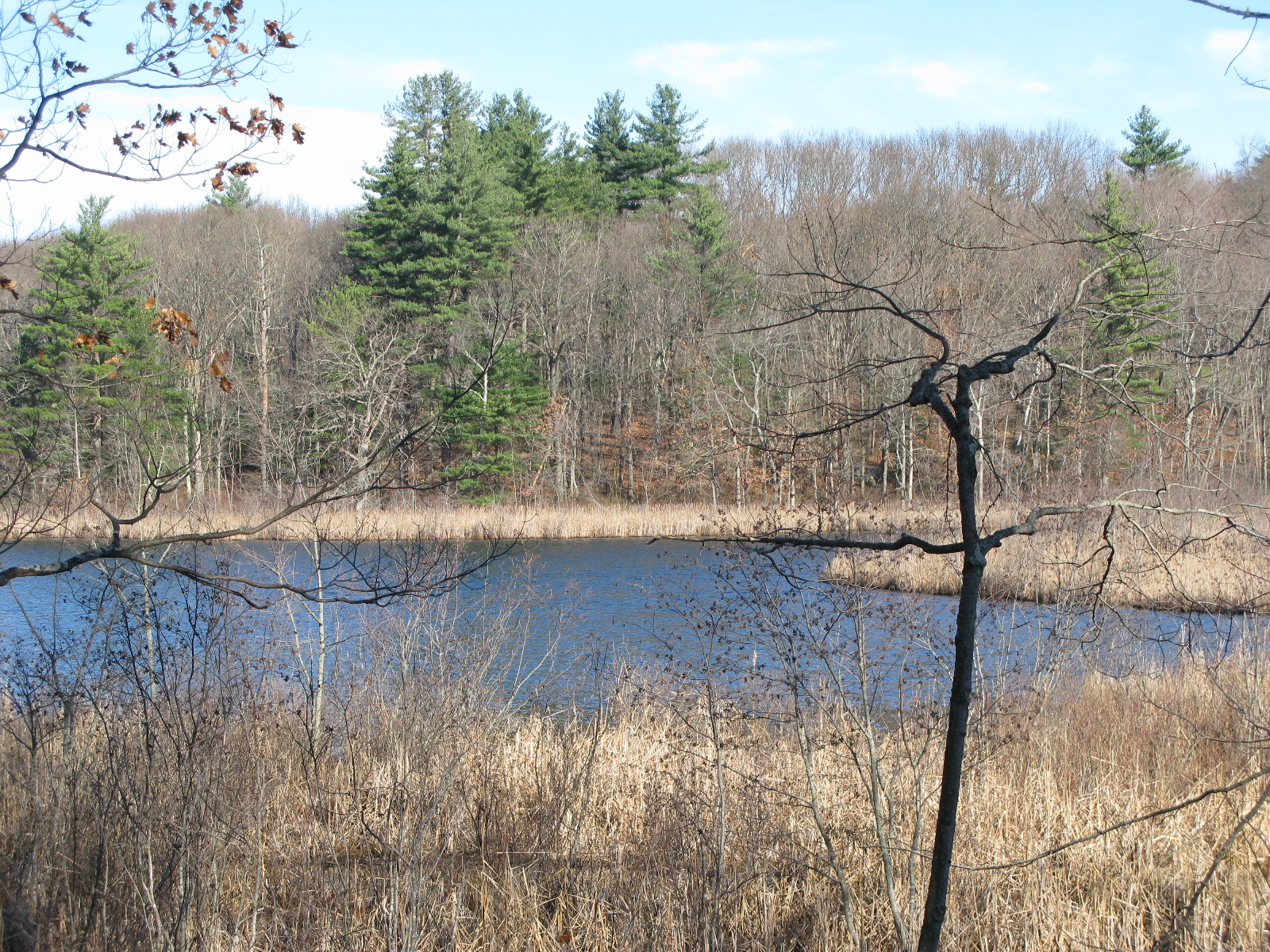
 Did the earth move? At first I though it was wind playing on the water, creating an illusion of motion. But the wind was actually pushing this reedy mass – which I guesstimated to be 50 yards wide – along. I’d happened by during the floating island’s mid-cruise, and it took about ten minutes for it to complete its voyage, until, I think, it snagged on the other side. I assume that if the wind reverses, it will move again. Here’s an excerpt from a history of Haverhill, Massachusetts, where I saw this, detailing past floaters in the area. Here’s one in Springfield, MA, that made the big time. A mass of roots and moss and gas, with a couple of very young trees on it, the island’s slow progression was one of those perfect, and perfectly unexpected, observational moments of wonder and curiosity that a walk in the wild of the woods, or just down the street, may reveal.
Floating Island
8 responses to “Floating Island”
-
Plainly quite fantastic! I walked on floating sphagnum bogs and I know of floating islands on the Amazon and the like but this is fascinating. Starting to read your post I too was wondering what would happen if the wind changed directions… I wonder how does one map these islands? Thanks!
-
You can bet I did a double-take, several of them in fact. I can imagine such things in the Amazon, but this was in suburban northeast Massachusetts; just beyond the trees is a golf course, and in the distance a firing range. Here’s the Google view of Chadwick Pond, date unknown, and it looks like there are several of these movable clumps in the pond’s NE corner, looking more separated from the main body of water than when I was there last month.
-
-
Thanks for the map to the floating islands’ spawning ground… green icebergs of sort. On the satellite pix it looks like a floating sphagnum bog. They do cary trees and everything, even on the move now I know. Wonder about the process though.
-
Phragmites reed island in Massachusetts http://www.youtube.com/watch?v=k03Y_BZDLdY apparently common on the Danube
The rhizomes do grow floating in the water, eventually forming a dense mat. Breaking off is easier to figure when near the sea (tides, surges) or by a big river. But in a small lake?
-
This is amazing! When I first looked at your pictures I thought you had done some kind of photoshopped gag. The Springfield, MA article you linked to is quite informative. I don’t understand why people would want to destroy them and the habitat they provide for wildlife, but I had to laugh at the “bunny hugger” comment. Very cool. Thanks for sharing.
-
Property owners, having sunk so much money into the legal fiction of owning a piece of the earth, get all weird when it comes to protecting that property from moving clumps of anarchic land.
P.S., I only pull fast-ones once a year, and then purely the old-fashioned way, no Photoshop in the house:
-
Yeah, I remember reading about the Coney Island whitefish and was a bit puzzled. I’ll try to remember next April Fool’s.
-
-
 Backyard and Beyond
Leave a comment