A beach is an inhospitable place. The wind turns sand into a blasting medium. The sea means a high level of salt, which is antagonistic to much life. In summer, the sand’s heat makes you jump. If you look closely, you’ll see invertebrates adapted to this harsh environment; there’s all sorts of life underground, especially in the inter-tidal zone; further up the beach, the wrackline provides shelter and nutrients. But otherwise, beaches of the Atlantic Coastal Plain are rather empty. They do collect an awful lot of remains, however. Shells are the most obvious examples. Rather less frequent are big mammals. Earlier this month, while walking along the Nantucket Sound side of Nantucket Island, I came across two dead harbor seals.  The upper jaw of one of them, showing the animal’s teeth. I don’t know why, but I was surprised they even had teeth. Shouldn’t have been, they’re fellow mammals. You can also see some of the hairs bristling from the snout, reminding us that seals are related to dogs. (My posting on NYC’s harbor seals; Ian Frazier’s sub-only piece in a recent New Yorker on the topic.)
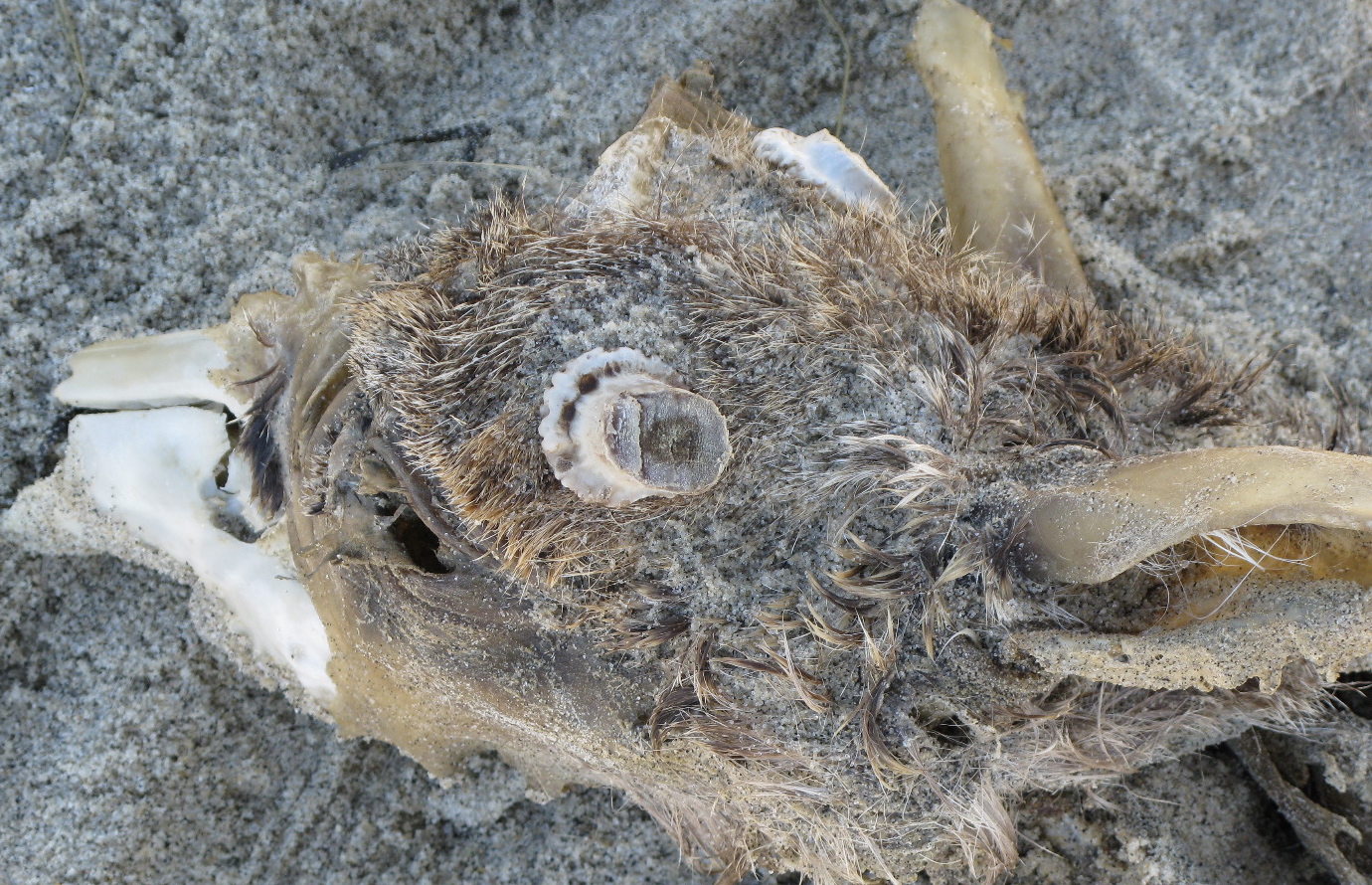 Some years ago, I found a dead white-tailed deer on this same stretch of beach. It was fairly recently dead, and hence mostly intact, except for the eyes, which are of course the softest way in. The deer I saw more recently was in a much more advanced state of decomposition. The neck vertebrae disappeared into the sand, where I presumed more of the remains were to be found. (What a bonanza for those critters that decompose the world!) Notice that the antlers have been sawed off here by an earlier beachcomber. Antlers are a sign of a male deer; they shed them every year in the winter, then grow them back again, each time more elaborately, branching into more and more “points” as the animal ages. Rich in calcium, shed antlers are usually quickly re-absorbed into the ecosystem by other mammals and invertebrates.
 I’ve posted before on the much more common sight of dead sea birds along the beach. This trip was no different. Here we can see the belly feathers of a red-breasted merganser and admire their patterning.
Beach CSI
3 responses to “Beach CSI”
-
Wow, those are quite some finds. And what a set of choppers on the seal. I don’t think I have ever seen a dead mammal on a beach, although I remember finding pretty large sand sharks and other fish. Strange about the deer – do you think it died on the beach or was washed up by the sea? I always imagine them going off to some more hidden spot to die, not right out in the open of a beach.
-
Yes, it is odd about the deer. There are a lot of them on the island, although the ones you usually see dead are car-hit ones.
-
-
[…] winter beach is often the last resting place of fish, fowl, and mammal. On my last walk along the north shore of […]
 Backyard and Beyond
Leave a comment