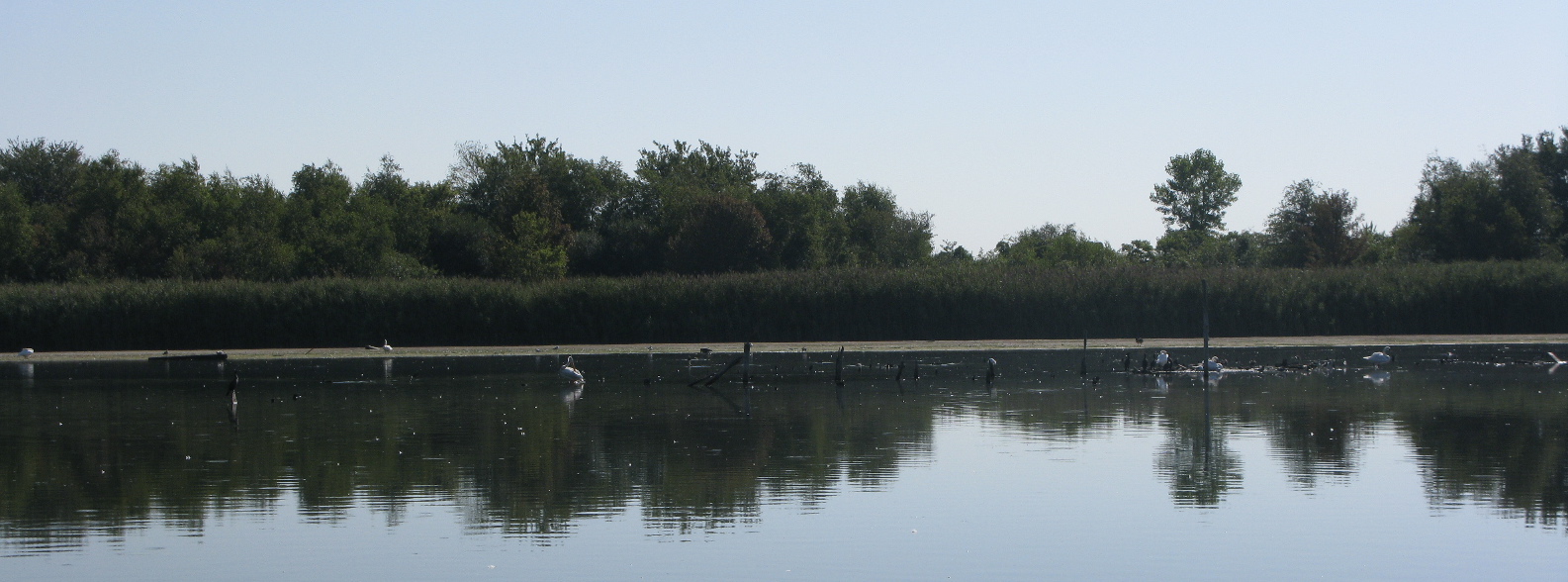
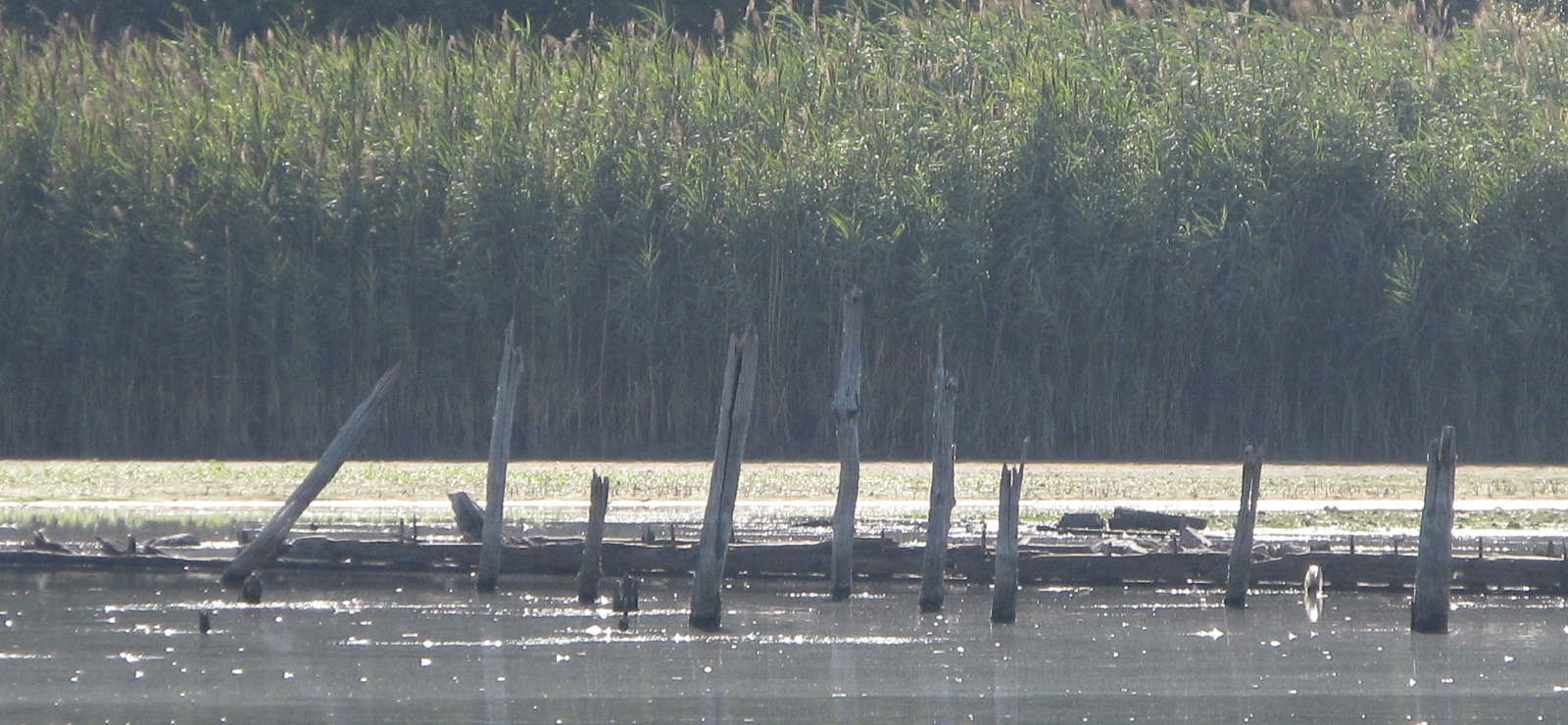
 Recently, we ran into a fellow birder at Jamaica Bay Wildlife Refuge’s East Pond. He alerted us of a rare marbled godwit located at “the Raunt.” In late summer, the JBWR is the place to go birding if you’re in the city. Migrating shorebirds heading south stop by by the dozens, hundreds, and, for some species, thousands, to rest and feed in the fresh water and on the exposed mud flats, while JFK jets lumber overhead. The Raunt itself is a birder’s landmark on the east side of the pond, about a fifth of the way up the mile-long body of water, whose level is lowered this time of year for the birds. (See The City Birder’s Google map of the local hotspots.) The remains of an old pier or boardwalk or bridge are revealed when the water level is reduced. A tall pair of waterproof boots and some caution are necessary to reach the Raunt through the gooey murk. But just what is the Raunt?
Well, my curiosity was finally peaked.
Turns out it used to be a stop on the Rockaway Beach branch of the Long Island RR. The railroad company crossed the bay to the Rockaway Peninsula in 1869 and soon thereafter started stopping at the Raunt for fisherman. (If you’ve ever taken the early weekend Metro North and wondered why it stops at stationless Breakneck Ridge and Manitou, it’s for the hikers). Here’s a picture from the Queens Archives’ Flickr, taken in 1933.
Eventually, people settled the Raunt. There were even three hotels. It was mostly a summer community, and, one imagines, knowing of Broad Channel today (the community just to its south) it was probably pretty insular. In a snappy and snippy Life Magazine article from March 17, 1967, the Raunt’s erstwhile residents were referred to as “marshland squatters.”
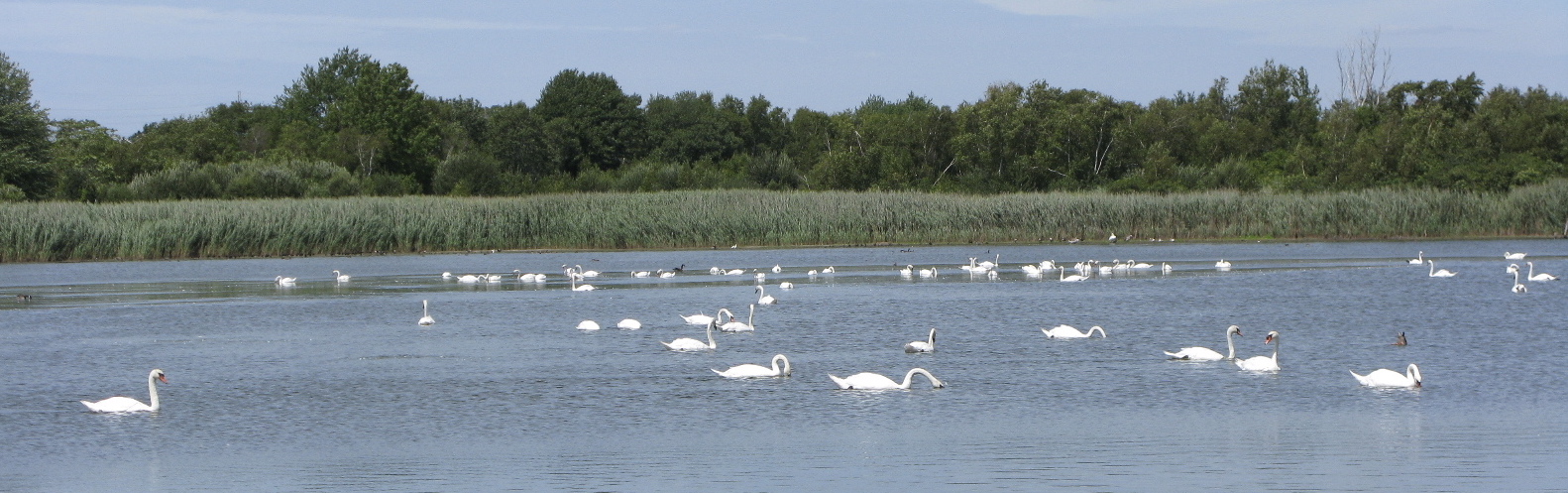
Emperor Moses’s Parks Department got control of Jamaica Bay in the late 1930s. In the early 1950s, the MTA, then still the NYCTA, took over the LIRR. They wanted an embankment instead of the existing fire-hazard-of-a-trestle, but Moses wouldn’t let them dredge unless he got something in return. Ah, simpler times. He got two fresh water ponds, imaginatively named West and East, and a bird sanctuary by 1953.
In 1972, the area became part of Gateway National Recreation Area as the airport at JFK threatened to expand all the way into Brooklyn. Elizabeth Barlow (now Elizabeth Barlow Rogers) wrote this piece in New York, Dec 8, 1969, detailing the refugue’s history on the eve of transformation into federal territory.
The Raunt was named for a channel, since filled in. In fact, there were/are several “Raunt” channels in the area. The topography of the area north of Broad Channel has changed radically in a century. A little archipelago has been cobbled together into one piece of land by dredging and filling. Some of the bits of land that were consolidated were Goose Creek, Rulers Bar Hassock, Black Bank Marsh, and Jack’s Hole. Life’s man says “Raunt” is from the Dutch. I couldn’t find any sign of it in the English. This piece in the Rockaway Wave offers some folk etymology, but I’m not convinced. Got any ideas? This NPS pdf of a history of Jamaica Bay has some basic maps of the changes in the area, starting on p.76.
The resiliency of place names, those ghosts on the land, in the face of radical geographical and political changes, is a curious phenomenon. It’s the birders who carry on the tradition now.
 Backyard and Beyond
Leave a comment