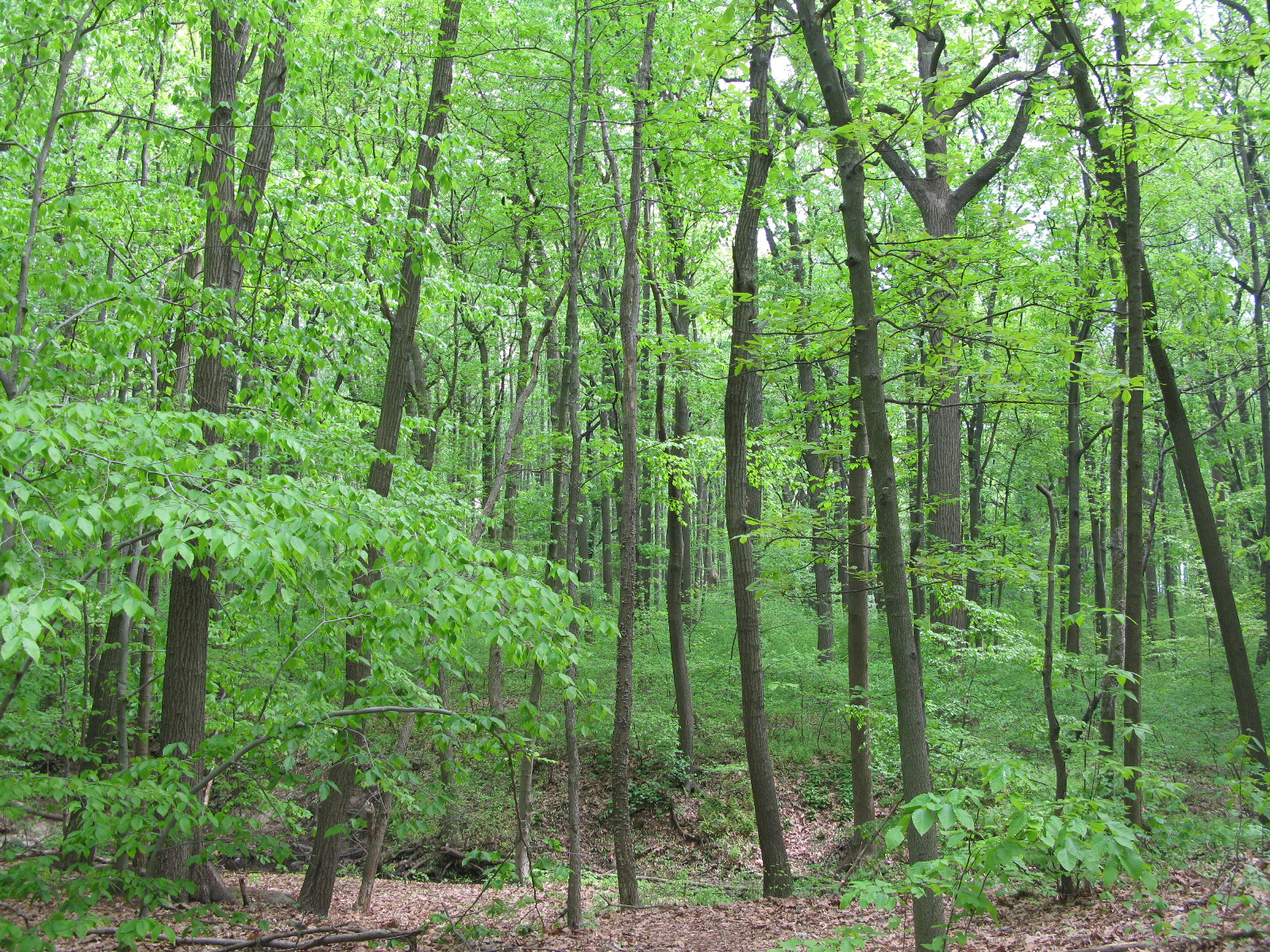
 Staten Island was the last of the city’s five borough’s to develop. Most of that development came after the Verrazano Bridge opened in 1964, so it was late “post-war” but it was definitely suburban (some of it god-awful). It remains the least populated part of the city; hence, it is the greenest of the boroughs.
On Sunday, we went out to Wolfe’s Pond Park to learn about the S.I. Dragonfly Atlas citizen science project coordinated by Seth Wollney of the Staten Island Museum. It was admittedly early for dragonflies, but we did see common green darners over the pond. We look forward to going back later in the spring and summer.
 This, however, is not a dragonfly. It’s an eastern forktail damselfly, seen in the grassy swarth above the park’s beach. How do we know it’s not a dragonfly? Note that the wings are folded; dragonflies rest with their wings open. Now, there are some spread-wing damselflies, who, as their name suggests, hold their wings open when resting, so in their case your should look to the eyes: dragonfly eyes touch each other on the top of the head, damselfly eyes are separated. Also, damselflies are generally smaller animals and weaker fliers.
I got to see a bumble flower beetle in the air, and they in fact do look like flying bumblebees. Birds included first-of-the-year Eastern kingbird, warbling vireo, and orchard oriole. One anomaly was a handsome cockatiel on a roof. It was an obvious escapee from some foolish pet owner, and doubtlessly doomed to easy picking by an accipiter. Another sign of the dangerous intersection of man and nature was a baby spotted turtle that had been crushed while crossing the road.
Walking in the woods, we saw New York fern, Solomon’s seal, false Solomon’s seal, and a good sized clump of devil’s walking stick. And these wildflowers:
 Spring beauty, Claytonia virginica. Has an edible tuber (no, we didn’t forage it.)
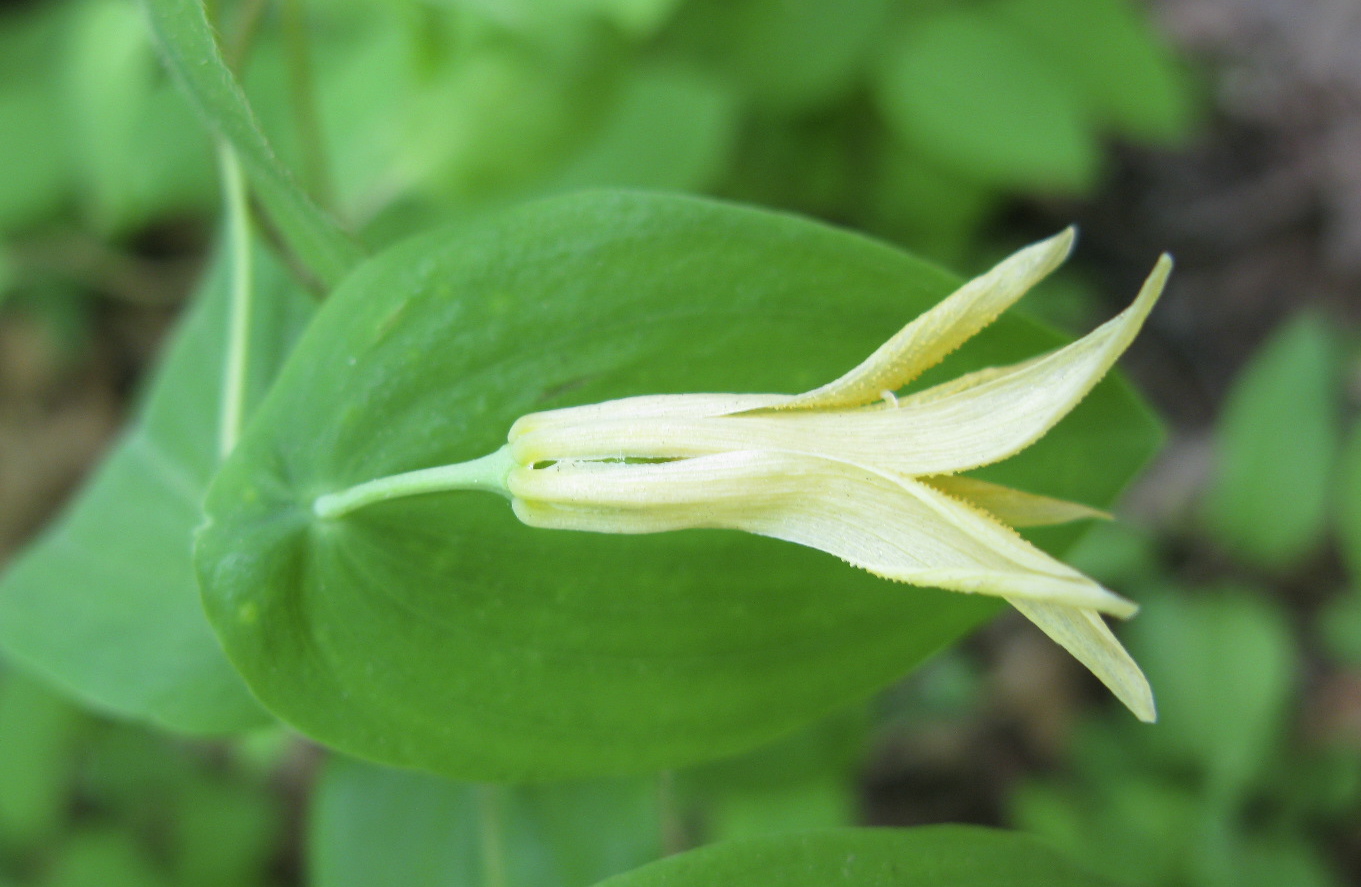 Perfoliate bellwort, Uvularia perfoliata. “Perfoliate” was the word of the day, meaning the flower stem seems to pierce the leaf.
 Backyard and Beyond
Leave a comment