 Nothing remains the same; this is the lesson of the earth. And it is particularly the lesson of humans on earth, having reached a stage where we are transforming the planet in unprecedented ways.
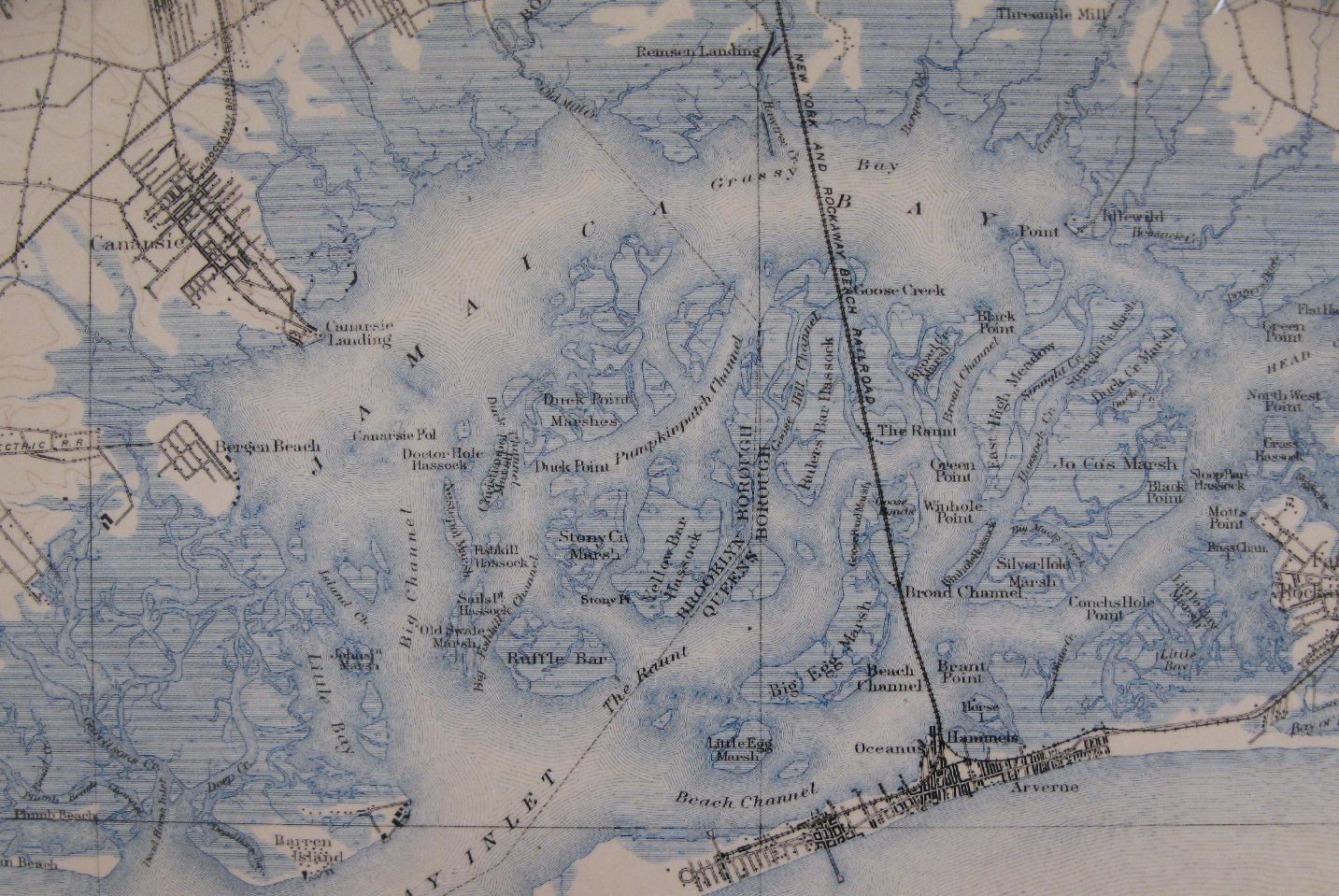
Here’s the USGS’s 1898 map of Jamaica Bay, crossed by a railroad down to Oceanus and Hammels. (“Oceanus” has disappeared from the map, sadly.) It looks differently now, with a lot less of the vital marshland that once ringed the southern end of the terminal moraine of Long Island and dotted the great bay itself. I’ve previously told some of the story of the transformation of this area into the Jamaica Bay Wildlife Refuge, when Robert Moses got a bird sanctuary and the MTA got the railroad.
That railroad is now the A train through Broad Channel to the Rockaways, which is still not running after being damaged by Hurricane Sandy. I took the alternate route, which might even be better, the Q52 from the Rockaway Blvd station. Better because the express bus stops right in front of the Jamaica Bay Wildlife Refuge. At the Refuge, though, things are different. The path around the West Pond has been breached; Sandy punched out a channel into the Pond from the south.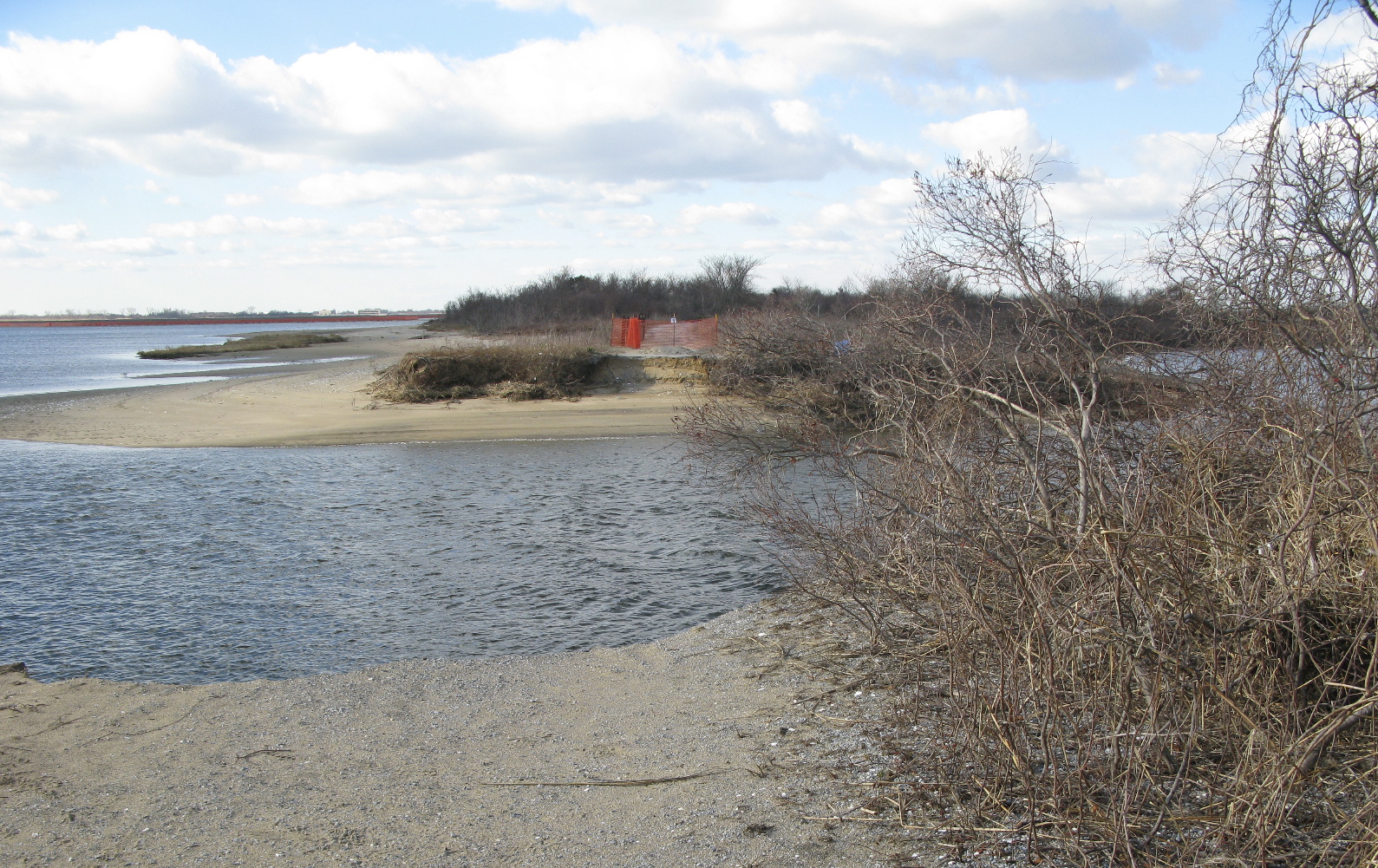 This has turned the (mostly) fresh water pond into a tidal corner of the larger Bay. It’s a radical change. While the tidal flats should be good for shorebirds, freshwater-loving waterfowl have abandoned the Pond. An important regional bird refuge has thus essentially been halved (the East Pond is in better shape). I, and many others, are hoping the NPS, which runs JBWR as part of Gateway National Recreation Area, engineer a solution. As of this date, though, the future status of the breach remains unclear. It isn’t just a matter of closing the breach; the Pond would have to be re-freshwatered. On the plus side, the salt may kill off the phragmites.
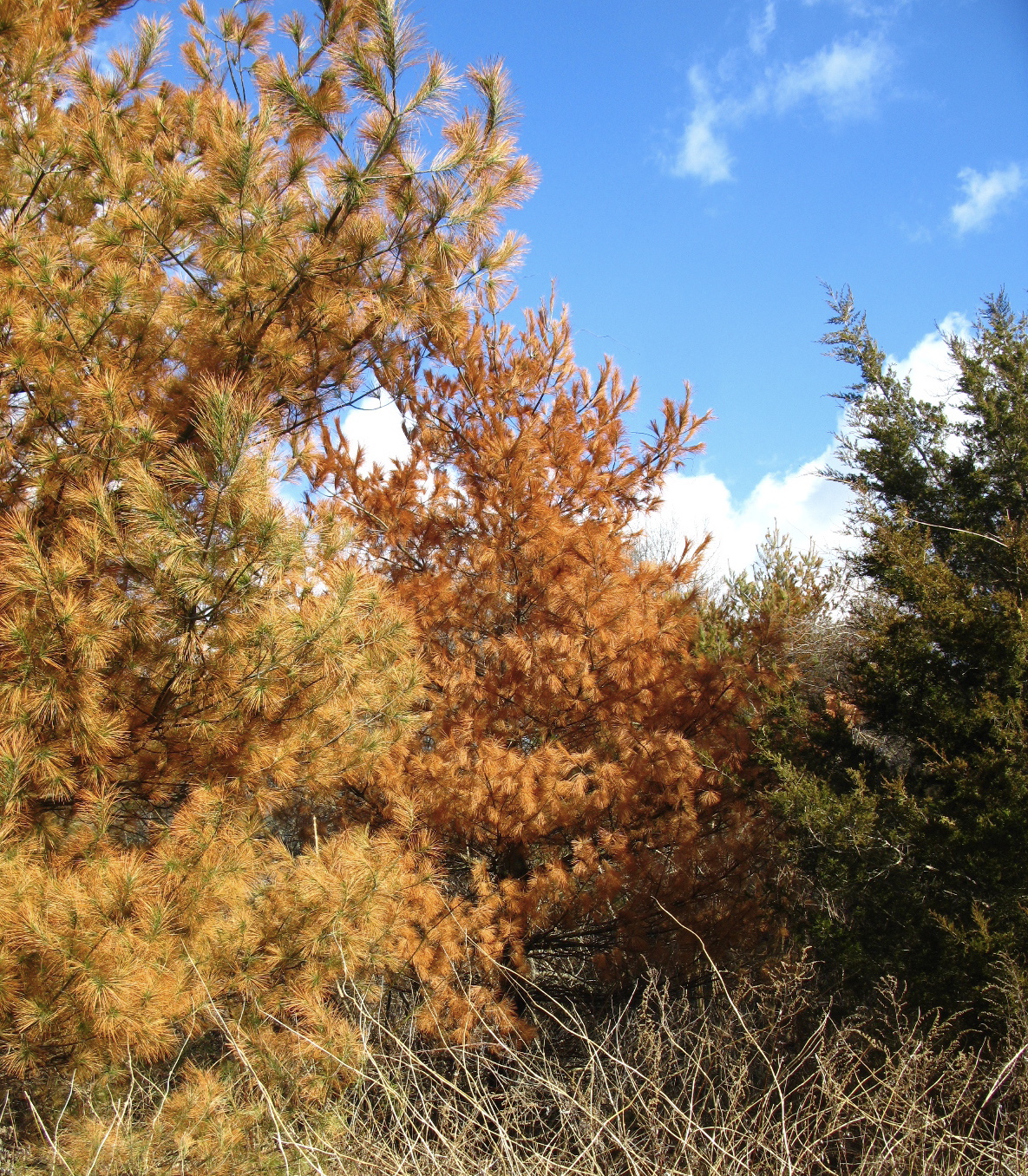 Meanwhile, tidal wrack still clogs the area, north of the path, and, as pretty as these pines look, they are dying.
 Backyard and Beyond
Leave a comment