Many of us look to the stars hoping for new discoveries. Obviously, there’s plenty to find out there. But some people seem to think everything has already been done right down here. Ha!
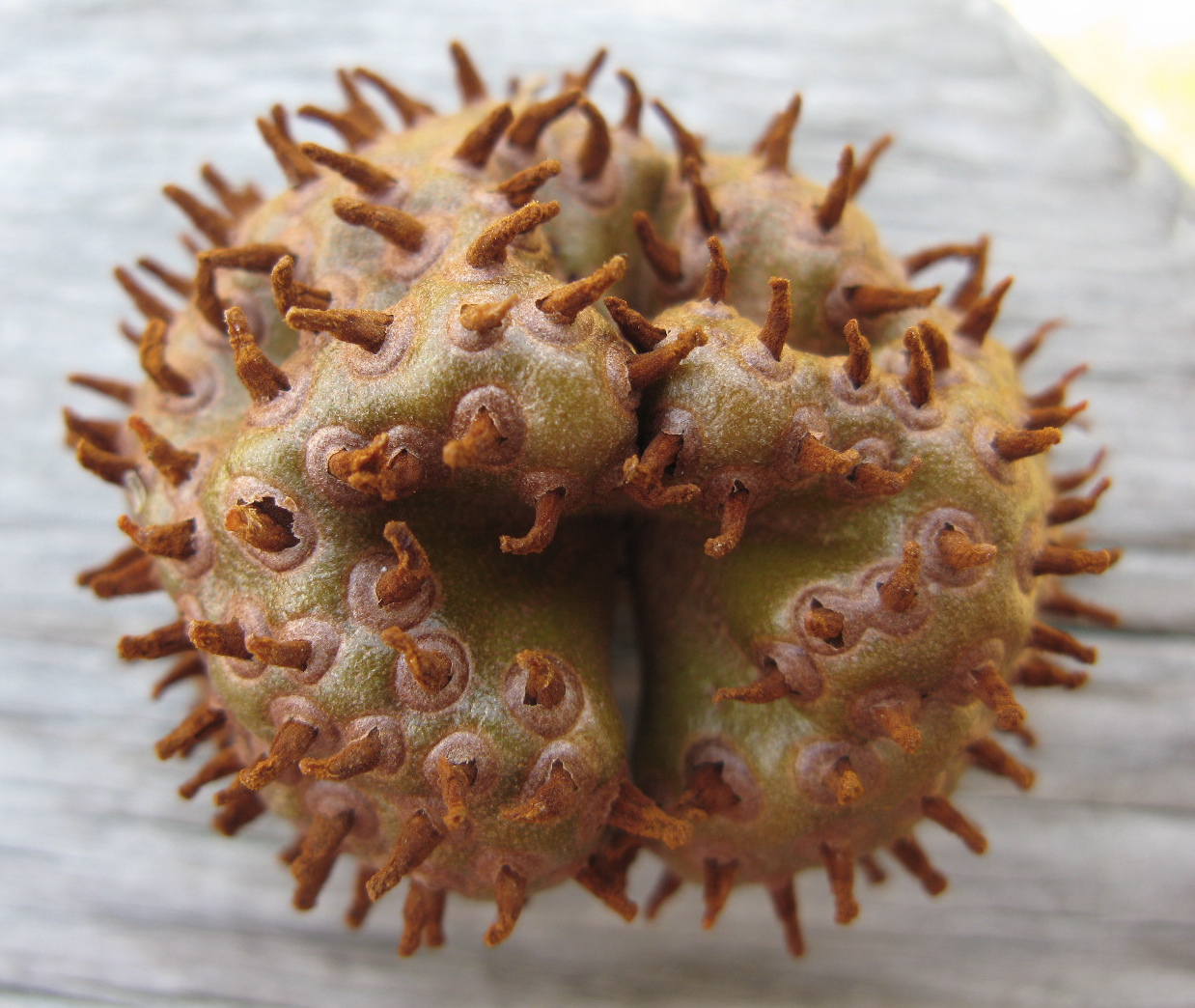
Last week I was on Nantucket Island, off the coast of Massachusetts. Thirty miles at sea, it’s a damp and very windy place. Evidently, this kind of climate is just about perfect for cedar-apple rust. This is a fungus, Gymnosporangium juniperi-virginianae, that has a fascinating, dual-tree life cycle.
The picture above is of the gall, which grows on Eastern red cedars (actually junipers, Juniperus virginiana). There seem to be a good number of them this year. For apple growers, the rust is a disease, hence it’s fecund representation on the web on ag and horticulture sites. For amateur naturalists, it’s simply mind-bending.
The “blooming” of the rust is a late April/early May event. I’ll be missing it this year, so the photos shared below come from my archives from several years back. (Pre-macro lens days.)

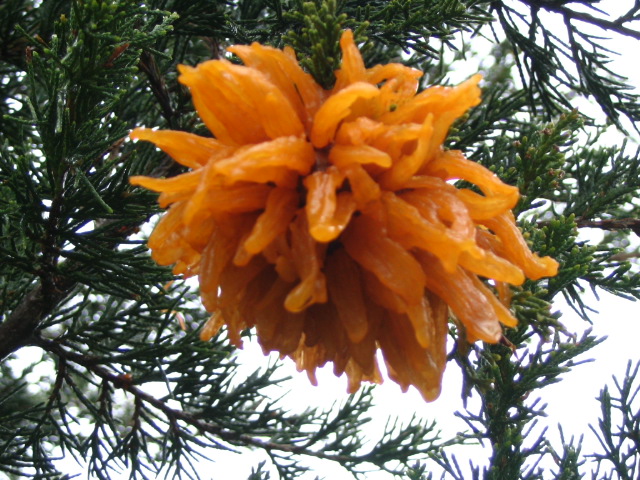 In summary, spring sees a gall, which has over-wintered on an eastern red cedar, bloom with these orange gelatinous tendrils, called telial horns, which send teliospores on the wind to find, hopefully for the fungus, apple trees. (The nearest apple tree I know of to these cedars is about a football field away.) There, on the apple’s leaves, fruits, and stems, the rust grow through the summer. Then it too “blooms,” from colorful lesions, but very different looking. These send other spores out to infect the nearby red cedars for the over-wintering … and around it goes.
 Backyard and Beyond
Leave a comment